After a factory injury, fire, chemical release or vehicle collision, security must help emergency teams reach the scene without allowing unplanned access, contamination or a second casualty. You will be able to map the response sequence, assign responsibilities, control gates and preserve records for the formal investigation.
Key takeaways
- Raise the alarm, stop exposure and assign one incident commander.
- Keep unprotected people out and direct responders through the correct emergency gate.
- Restrict access after the incident and preserve CCTV, logs and physical evidence.
- Test response times, drills, licences and reporting before appointing a provider.
The first 10 minutes: raise the alarm, stop exposure and establish command
Within seconds of a factory safety incident, the priority is life safety: raise the alarm, stop the affected operation and prevent further exposure. Security should open the emergency route, direct responders to the correct gate and keep unprotected people out while the plant’s incident commander takes control.
- Trigger the site alarm and call the required emergency services. Send a named employee to meet fire, police or medical responders at the gate.
- Stop the machine, production line, vehicle movement or contractor activity creating the hazard. Isolate energy or utilities only through the authorised procedure.
- Establish a controlled exclusion zone. Prevent re-entry, halt truck or visitor access and use an emergency override so responders are never delayed by normal badge checks.
- Give first aid only when trained and safe to do so. Do not move machinery, clean a spill, reset an alarm or disturb physical evidence unless the incident commander authorises it.
- Provide responders with the site plan, emergency access list, gate keys and current hazardous-material information. Keep access clear for an ambulance or fire appliance.
- Notify the shift supervisor, EHS lead and senior management, then record who enters and exits the affected area.
A sound factory safety incident response separates rescue from investigation. Security protects people and the scene, while the incident commander decides whether to evacuate or shelter in place. Preserve CCTV, access-control logs and witness details before systems overwrite them; at an industrial site in Pimple Gurav, rapid access and strict scene control must operate together.
How security responds to fire, spills, collisions and violence
Guards must switch tactics to match the hazard, while keeping the emergency route open and directing fire, police and medical responders to the correct gate. Manufacturing security in Pimple Gurav is a controlled handover between guards, the incident commander, EHS staff, supervisors and emergency services—not a guard-only operation.
- Fire or smoke: raise the fire alarm, stop entry toward the affected area, guide occupants to the assembly point and keep fire-service access clear. Do not permit re-entry or ask an untrained guard to fight the fire. Record who enters under the incident commander’s authority.
- Chemical spill or gas release: move people upwind and away from low-lying or enclosed areas, isolate the zone and stop vehicles approaching it. Do not touch the substance, clean the spill or operate nearby equipment unless authorised by EHS; provide the product name or safety data sheet to responders.
- Forklift or truck collision: halt vehicle movement, secure the lane and protect the injured from further impact. Call medical responders, give first aid within your training, and do not move vehicles, controls or debris unless leaving them creates immediate danger.
- Violence or suspected sabotage: create distance, call police and management through the escalation matrix, and direct people to shelter or evacuate according to the threat. Do not confront an armed or violent person; control gates and preserve CCTV, access logs and witness details.
In every case, record entries and exits without delaying rescue. Keep radios, manual gate controls and telephone fallbacks ready if power or networks fail.
Controlled access and evidence preservation after the danger passes
Protect responders and the scene by replacing normal access rules with a controlled cordon, not a total lockdown. Keep one entry point, open an emergency route, and use an emergency override for firefighters, ambulance crews and authorised investigators.
A named employee should meet responders at the gate with the site plan, hazardous-material information and a safe escort.
- Establish the cordon beyond the hazard and prevent re-entry, including by managers, contractors and relatives.
- Record every authorised entrant in an incident access log: name, organisation, entry time, purpose, exit time and escort.
- Direct trucks, visitors and media away from the scene without blocking fire lanes or ambulance movement.
- Protect witnesses from interference and note their names and contact details for the incident commander.
- Keep guards at the boundary while the incident commander, EHS lead or emergency service decides when access changes.
Life safety comes first, but do not reset alarms, move machinery, clean a spill or collect physical evidence unless authorised. Preserve the original CCTV and access-control exports with timestamps and metadata; a phone recording of a monitor cannot replace them.
Secure relevant radio logs, gate registers, permits and maintenance records against deletion, and document each handover to plant management, police, fire services or medical responders. These controls address industrial site security problems without sacrificing rapid access.
What to test before choosing an industrial security provider
A provider that passes a routine gate-check may still fail during a prolonged incident. Compare industrial security services pimple gurav providers through a live drill: cut normal power and network access, simulate a blocked gate, and extend the scenario beyond one shift.
| Capability | Ask the provider to demonstrate | Reject the plan if |
|---|---|---|
| Emergency continuity | Guards use radios and telephone fallbacks; CCTV records on backup power; gates open manually | Communication, recording or entry depends on one power source |
| Controlled access | Staff open an emergency route, direct fire, police and medical responders to the correct gate, and stop re-entry | The procedure says only “lockdown” without an emergency override |
| Handover | The incident commander, EHS team, contractor, police, fire service and medical responders receive named roles and a written log | Guards are expected to manage the whole event alone |
| Evidence protection | Staff preserve CCTV and access records, log entries, identify witnesses and isolate the scene | Guards clean spills, reset alarms or move machinery without authorisation |
| Staffing and compliance | The agency shows Maharashtra deployment records, PSARA licensing, prescribed guard training and a relief roster | No replacement team exists for an incident lasting beyond one shift |
Ask for a scenario covering a chemical release, vehicle collision, crowding and a failed access-control system. Industrial security services for after safety incidents in pimple gurav should also account for hazardous substances, utilities, contractors and confined areas, not only theft.
Topgun Corporate Services Pvt Ltd should be assessed against this same evidence: drills, fallback equipment, handover records and response times—not guard-count promises. The factory remains responsible for safe work systems and statutory incident reporting.
Related product
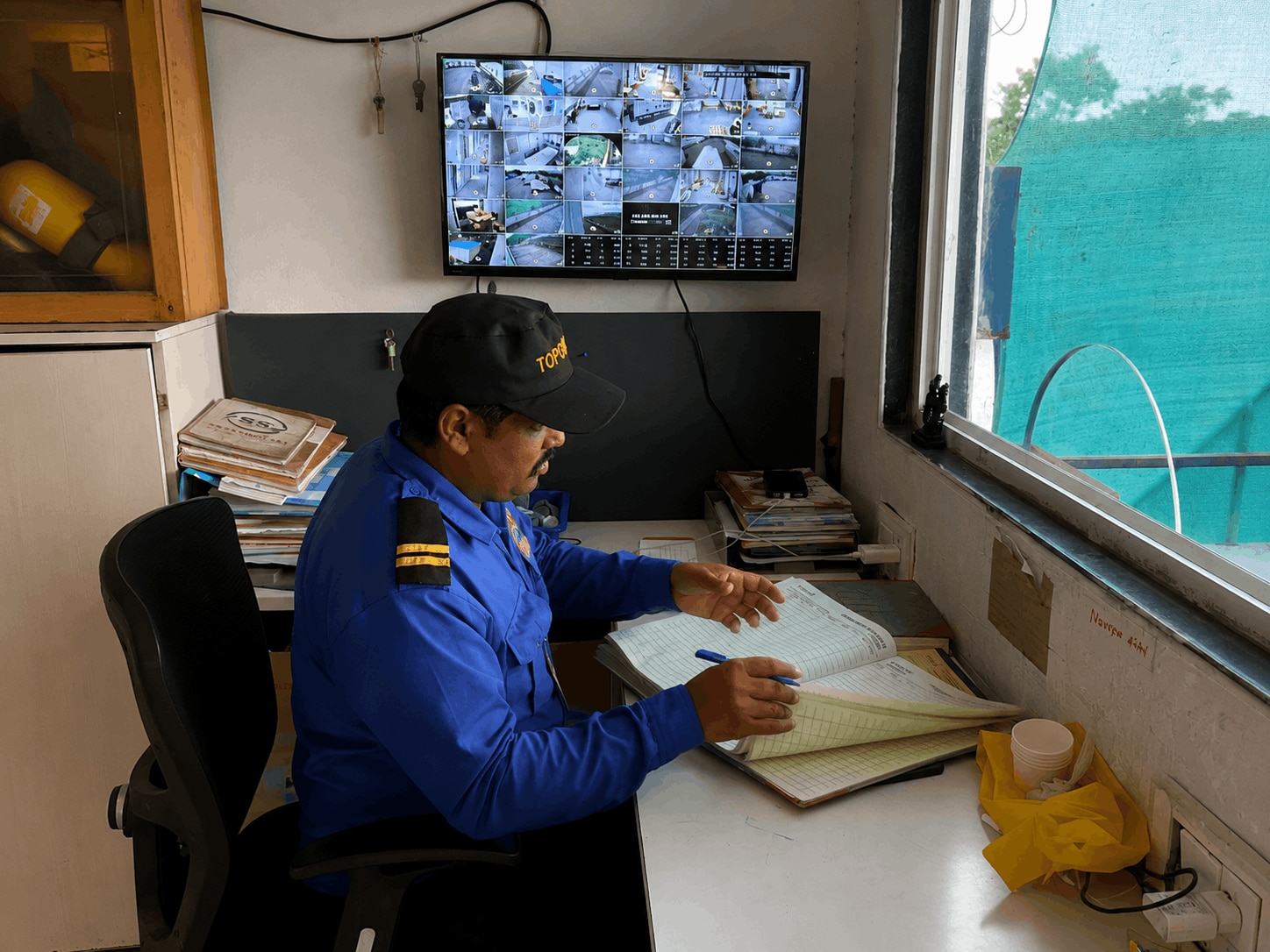 | Industrial Security Services Industrial sites are busy places. Trucks are constantly moving, employees work in shifts, materials come and go, and there are plenty of areas that... View product → |
Turning the incident into a measurable security improvement
A post-incident review should be chaired by the incident commander or EHS lead, with security, the shift supervisor, maintenance and relevant emergency responders present. Reconstruct the timeline from radio traffic, CCTV, access-control logs, alarm records and witness accounts.
Examine the handover between the plant team, guarding contractor, police, fire services and medical responders, not just the guard’s actions.
Look for enabling conditions behind the factory safety incident response, including blocked fire lanes, missing visitor records, failed radios, poor lighting, unescorted contractors, alarm blind spots, blocked muster points and conflicting instructions.
Separate life-safety actions from evidence preservation: guards can isolate the area and record entry, but must not clean spills, reset alarms or move machinery without authorisation.
For every finding, maintain a corrective-action register:
- State the specific failure and risk.
- Name one accountable owner, not a department.
- Set a due date and required remedy.
- Define evidence of completion, such as a repaired radio, cleared lane or updated access list.
- Have EHS or the incident commander verify the fix and record the closure date.
Test readiness after closure with a tabletop exercise and a live drill. Require the gate team to use the emergency override, meet responders, retrieve site plans and prevent unauthorised re-entry. Check radio coverage, CCTV retention and muster-point access.
Reopen any action that fails verification; unresolved industrial site security problems are not closed because a meeting occurred.
Frequently asked questions
What should industrial security do in the first 10 minutes of a factory incident?
Raise the alarm, stop the affected operation, prevent further exposure, open the emergency route and direct responders to the correct gate while the incident commander takes control.
How should security respond to fire, spills, collisions and violence?
Security should follow the site emergency plan for each hazard, isolate the affected area, keep unprotected people away, call the required responders and maintain clear access for emergency vehicles.
How can a factory preserve evidence after a safety incident?
Control access, record who enters, preserve CCTV footage and gate logs, protect physical evidence from disturbance and document the scene before cleanup or repairs.
What should you test before choosing an industrial security provider in Pimple Gurav?
Test alarm-to-arrival time, emergency-gate control, guard training, escalation procedures, incident reports, drill performance, licence documents and coordination with the factory incident commander.
Keywords