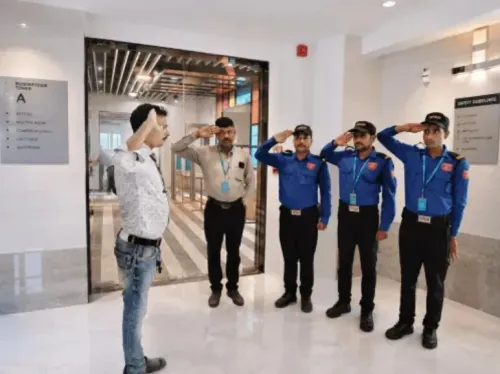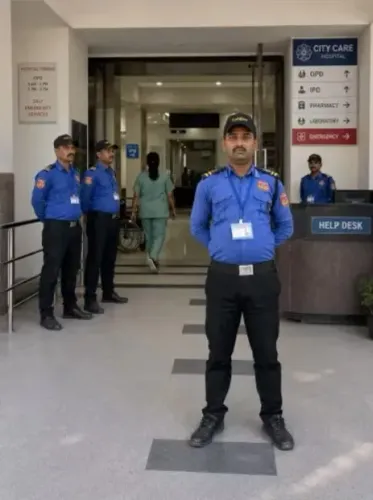

Heavy rain turns ordinary access points into security hazards: a flooded basement ramp can trap vehicles, a power cut can disable every electronic control, and a wet delivery driver can bypass reception. By the end, you will be able to map Kondhwa-specific risks, set guard strength, define wet-weather duties, and compare a security contract against measurable operating needs.
Key takeaways
- Map basement ramps, pump rooms, drains, exits, and electrical rooms before deployment.
- Set patrol routes around flood points, blind spots, loading bays, and boundary walls.
- Use a written response plan for flooding, power loss, damage, and access control.
- Ask providers for PSARA records, guard logs, incident reports, and measurable service levels.
Map Kondhwa’s Monsoon Security Risks Before Assigning Guards
Low-lying approach roads, basement ramps, parking levels, loading bays and service entrances need protection before ordinary gate coverage during heavy rain. Include terrace drainage outlets, parapets, fire exits, pump rooms, electrical rooms and boundary walls in the first risk map. Mark where water enters, drains overflow, vehicles queue, and CCTV or lighting fails.
- Check every basement ramp for water depth, pump operation, blocked drains, slippery surfaces and the safe point beyond which vehicles must be stopped.
- Inspect rooftops and terraces for blocked outlets, loose sheets, fallen branches and water collecting near equipment.
- Record each finding with its exact location, condition, photograph or incident number, assigned person and rectification time.
- Treat a damaged wall, concealed trip hazard or stranded vehicle as an incident, not a routine observation.
| Area | Compare and check | Patrol record |
|---|---|---|
| Basement ramp | Water depth, pump status, drain blockage, surface grip and vehicle-stop line | Reading, pump alarm, photograph and assigned responder |
| Roof or terrace | Outlet blockage, loose sheets, branches and pooling beside equipment | Location, hazard condition and rectification deadline |
| Access perimeter | Queues, failed lights or CCTV, flooded routes and damaged walls | Entry point, affected route, incident number and owner |
This map tells monsoon commercial security services for Kondhwa where patrols must go first. It replaces a generic gate-post schedule with site-specific routes and escalation points. Do not send a guard into water near electrical equipment; an authorised facilities or electrical supervisor must decide isolation.
Set Guard Strength and Patrol Coverage Around the Complex Layout
Set guard strength by counting every vehicle and pedestrian gate, building entrance, parking level, loading bay, tenant or employee population, operating hour, and zone needing 24-hour coverage. A gate guard cannot also watch a basement, reception desk, CCTV screen, and emergency scene.
Price relief guards and shift overlap separately: “24-hour security” does not mean every zone is staffed continuously.
| Model | Strength | Limitation |
|---|---|---|
| Static gate post | Continuous entry control | Leaves ramps, pump rooms and parking unchecked |
| Scheduled mobile patrols | Covers dispersed wet-weather hazards | Creates gaps during incidents |
| CCTV and access control | Extends visibility and records events | Fails with power, network or water damage |
| Integrated guards plus technology | Combines response, records and detection | Costs more and needs tested escalation |
Build the roster around fixed posts first, then assign rotating patrols to:
- Basement ramps, pump rooms, electrical panels and loading bays
- Fire exits, terraces, roof drains, service entrances and dark parking areas
Record each route’s time, location, condition, photograph or incident number, and assigned rectification person. Provide waterproof rainwear, non-slip waterproof footwear, tested torches, radio or phone backup, sheltered rest points, and relief during prolonged rain.
When one guard must choose, protect life first: stop access to a flooded driveway, then secure a failing access system, while maintaining the gate if it remains safe. Commercial complex security Kondhwa buyers should require a post order naming who can close each zone and who receives escalation.
A maintenance responder must check pumps; guards cannot substitute for facilities staff.
Define the Response to Flooding, Power Loss, and Physical Damage
A post order must state who can close a basement, rooftop, electrical room, or driveway, and whom that person calls next.
In a monsoon security guards Kondhwa deployment, guards protect people first: they can stop vehicles at an unsafe basement ramp, close a flooded driveway, place barriers across a hazardous route, report blocked drains, and prevent entry to slippery or damaged areas.
1. Stop movement at the hazard. Do not send a guard into water near electrical equipment. Isolate the area with barriers, warn occupants, record the location and incident number, and escalate to the named facilities manager.
2. Keep electrical decisions with an authorised facilities or electrical supervisor. That supervisor decides electrical isolation; maintenance handles pumps, panels, leaks, lifts, generators, and structural defects.
3. Assign housekeeping to remove silt, dry lift lobbies, place wet-floor barricades, and report leaks. Guards control access around those hazards rather than replacing trained housekeeping or maintenance staff.
4. Give lift operators responsibility for entrapment procedures. The facility manager coordinates contractors, while emergency responders handle rescue, fire, medical, or structural incidents.
5. Include generator changeover, fire-panel alarms, access-control failure, manual visitor logging, and lift entrapment in the escalation route. Guards support evacuation and crowd control, but the property’s fire systems and records remain subject to the Maharashtra Fire Prevention and Life Safety Measures Act, 2006.
The post order must name each decision-maker and list the phone escalation sequence.
Control Wet-Weather Access and Night-Shift Visibility
Rain does not suspend entry control. Move arrivals to a covered holding point, keep vehicles out of the lobby queue, and complete verification before opening the barrier.
- Employees or residents: inspect photo ID or use the approved resident or employee register, then record the entry and vehicle number.
- Contractors: verify photo ID, confirm the work order with the tenant or facility manager, record the vehicle number, and issue a time-limited pass stating escort rules.
- Delivery personnel: confirm the recipient before unloading, inspect photo ID, record the delivery challan and vehicle number, and issue a pass that limits access to the loading or receiving area.
- Emergency responders: confirm the agency, vehicle, driver and incident with the facility contact, record the arrival, open the safest route, and maintain escort or access control without delaying rescue.
If rain makes a plate unreadable, photograph the vehicle, verify the driver and recipient by phone, and hold entry until the record is complete. Keep spare dry forms and a protected writing surface for wet visitor registers; an umbrella, damaged document or crowded lobby never justifies abandoned verification.
A business security services Kondhwa checklist must cover night-shift controls: torch batteries, generator changeover, emergency lighting, intercoms, electronic locks and manual visitor logs. Protect CCTV with covered housings, sealed cable entries, UPS-backed recording, time synchronisation, protected network switches and power supplies.
Log rain droplets, water ingress, outages and dark parking areas as incidents, and activate a response when coverage disappears.
Compare Providers Through Records, PSARA Checks, and Measurable Service Levels
Before appointing monsoon commercial security services for kondhwa, demand evidence tied to the proposed site, not a brochure. Verify the agency’s current Maharashtra licence under the Private Security Agencies (Regulation) Act, 2005; GST or labour registration does not replace PSARA authorisation.
Request these records for the actual deployment:
- Guard-wise character-and-antecedent verification
- Prescribed training records and deployment registers
- Post orders naming escalation authority
- Rainwear, footwear, torch, radio, and equipment checklists
- Relief arrangements for prolonged rain or absence
Walk the site with the agency and ask who checks the ramp pump, closes the electrical room, receives a delivery after reception floods, and responds when CCTV and intercoms fail together. Do not accept “24-hour security” without priced relief coverage and a priority order for competing incidents.
Measure the service in the agreement:
| Measure | Required term | Failure to prevent |
|---|---|---|
| Patrols | Route and frequency | Basement or terrace risks missed |
| Alarms | Maximum acknowledgement time | Delayed intervention |
| Blocked exits/camera failure | Reporting deadline | Hazards remain undocumented |
| Relief | Arrival time | One guard covers impossible duties |
| Incidents | Report submission time | No accountable record |
| Night posts | Attendance-check method | Abandoned posts go unnoticed |
For commercial complex security kondhwa, monsoon security guards kondhwa, or business security services kondhwa, compare these records and results. Assess Topgun Corporate Services Pvt Ltd against the same checklist: proposed Kondhwa staffing, records, escalation structure, and emergency coverage—not a generic package label.
Related products
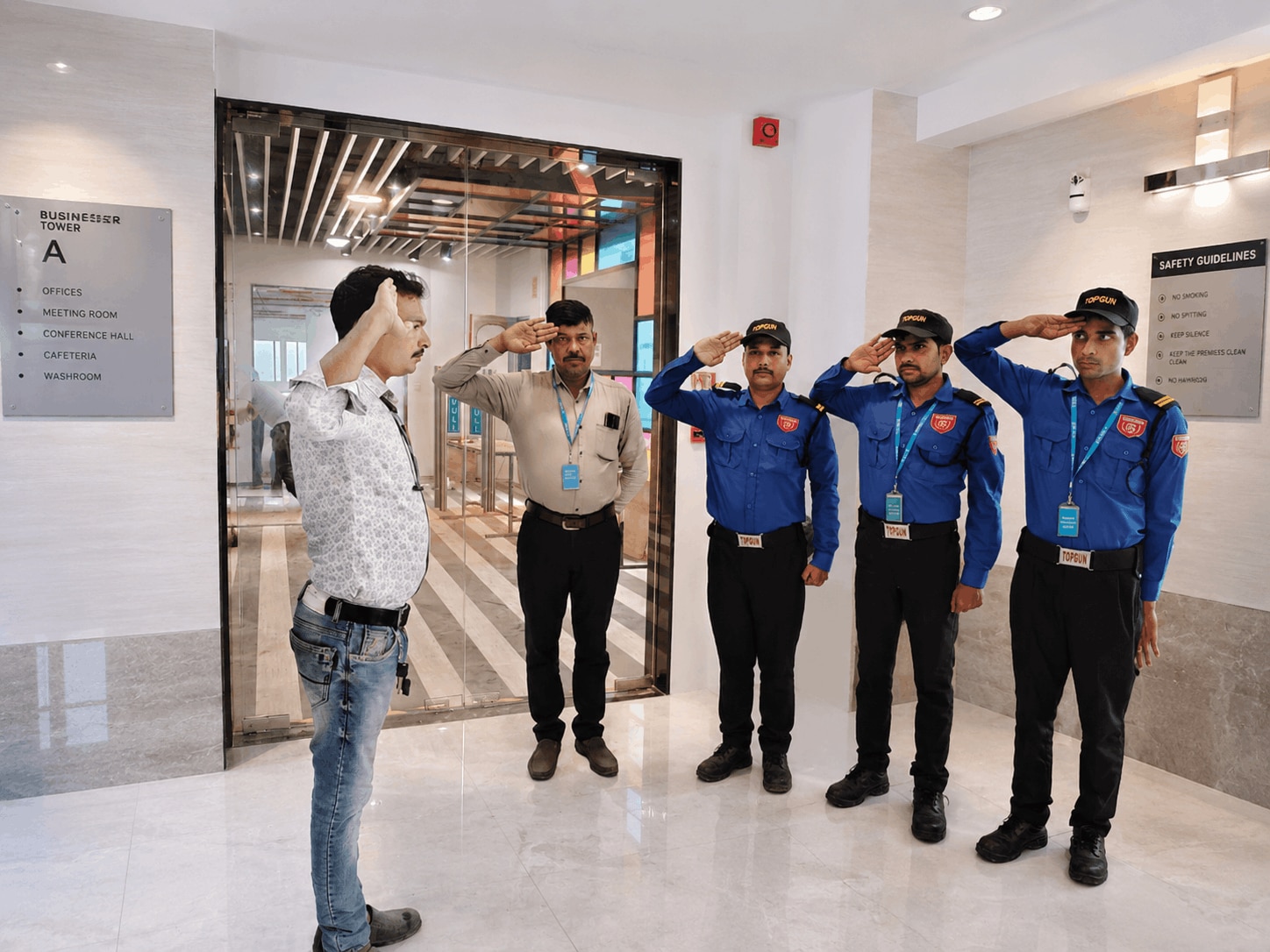 | Commercial Complex Security Services Commercial Complex Security Services Every commercial complex has hundreds of people moving through it every day—employees, visitors, vendors, and customers. View product → |
 | Security Services Topgun Corporate Services Pvt Ltd is a trusted provider of professional Security Services in Pune, offering reliable and customized security... View product → |
Frequently asked questions
Which areas need inclusion in a Kondhwa monsoon security risk map?
Map low-lying approach roads, basement ramps, parking levels, loading bays, service entrances, terrace drainage outlets, parapets, fire exits, pump rooms, electrical rooms, and boundary walls. Mark water-entry points, overflow locations, vehicle queues, and CCTV or lighting failure points.
How should guard strength and patrol coverage be set for a commercial complex?
Assign coverage according to the complex layout, flood points, blind spots, entry routes, loading bays, parking levels, and boundary walls. Create written patrol routes and record the time and location of each check.
What should guards do during flooding, power loss, or physical damage?
Use a written escalation plan that identifies who isolates unsafe areas, contacts facilities staff, controls vehicles and pedestrians, protects electrical rooms, reports damage, and records the incident. Keep emergency contacts and backup communication methods at the control point.
How can you compare commercial security providers in Kondhwa?
Ask for the provider’s PSARA licence details, guard deployment plan, training records, attendance and patrol logs, incident reports, supervisor visit records, and service levels for response time, relief staffing, reporting, and escalation.
Keywords