
The right arrangement depends on more than floor area: occupancy, washroom counts, operating hours, security controls and response-time expectations all change the workload. You will be able to compare staffing models, build a practical cleaning schedule and test whether a proposed provider can deliver dependable coverage before signing a contract.
Key takeaways
- Use a contractor when one cleaner cannot cover your floor area, visitors or operating hours.
- Choose in-house staff for stable, simple routines; choose contractors for coverage and supervision.
- Specify daily tasks, periodic deep cleaning, consumables and response times in writing.
- Measure attendance, washroom checks, complaint closure and cleaning quality every month.
When Do Housekeeping Services Make Sense for a Hadapsar Office?
A small, single-floor office with fixed hours, limited visitors and one or two washrooms may manage with one directly employed cleaner. Outsourcing becomes more useful when floor area, employee headcount or operating hours make one person’s coverage impossible.
| Office profile | Likely fit | Coverage concern |
|---|---|---|
| Small office, fixed 9-to-6 schedule | Directly employed cleaner | One person can complete routine work within defined hours |
| Larger floor area or higher headcount | Outsourced team with supervision | Cleaning, waste removal and washroom checks compete for the same hours |
| 24-hour operation or multiple shifts | Professional housekeeping for offices | Opening, occupied-hours and evening coverage need separate rounds |
| Frequent visitors, several pantries or washrooms | Team with reliever cover | A single cleaner cannot respond to simultaneous use, spills and replenishment |
Look for evidence that the current arrangement is failing: unattended washrooms, overflowing waste bins, missed evening cleaning, complaints without closure, or no cover during absence and weekly offs. These are coverage failures, not proof that employees do not value cleanliness.
Treat housekeeping services for corporate offices in Hadapsar as a facilities-management decision. Compare the required service hours, response times, supervision, equipment, chemical controls, access records and compliance administration with the internal effort available to manage them.
A provider should document tasks, inspections, incident handling and corrective action rather than promise only “daily cleaning.” If the choice is unclear, run a normal-day and after-hours pilot, including a simulated spill, pantry recovery, washroom inspection and access-control check.
Which Cleaning Model Fits: In-House, Casual Cleaner or Contractor?
The lowest quotation is not automatically the best value. Compare the four models against coverage, supervision, equipment responsibility and the management work left with your office.
| Option | Strength | Main gap | Check before choosing |
|---|---|---|---|
| In-house team | Direct control over people, schedules and methods | You manage recruitment, leave cover, training, chemicals, equipment, records and statutory checks | Budget relievers, supervisor time, equipment purchase and after-hours access |
| Single casual cleaner | Low commitment for a small, low-traffic office with limited hours | One person cannot clean the restroom, recover the pantry and respond to a spill simultaneously | Confirm absence cover, task priorities and response time |
| Facility-management contractor | Housekeeping plus supervision, maintenance coordination and wider site controls | Cost lines and access responsibilities can become unclear | Demand itemised pricing, trained relievers, supervisor availability and equipment ownership |
| Specialist housekeeping provider | Close operational attention when cleaning is the main requirement | Maintenance coordination and broader facility controls may sit elsewhere | Confirm training, machines, chemicals, consumables and service-hour coverage |
Ask providers of office housekeeping services in Pune what the quotation includes, who replaces an absent worker, and which restroom, spill and complaint response times are guaranteed. Require separate prices for periodic work, consumables, machine repairs and after-hours access.
For corporate office housekeeping Hadapsar, run a pilot across one normal workday and one after-hours period. Test pantry and restroom recovery, access controls, chemical storage, waste segregation and the supervisor’s response to a simulated spill or lost-property incident. This shows whether the operating method works in your building.
What Should Daily and Periodic Office Cleaning Cover?
A credible corporate office housekeeping in Hadapsar scope divides work by room and time, not by a vague promise of “daily cleaning.” Entrances, lift lobbies, high-use washrooms, pantries and meeting rooms need more frequent attention than storage rooms or low-traffic areas.
- Washrooms: clean and inspect fixtures and floors, replenish soap and tissue, remove waste, and record inspection times.
- Pantries: clean counters, tables, appliance exteriors and sinks; remove food waste and restore supplies.
- Work areas and common areas: dust accessible surfaces, clean desks only under the office’s clean-desk rule, disinfect specified touchpoints, and sweep or mop floors.
- Entrances and meeting rooms: touch up glass, doors and floors, reset rooms between bookings, and respond to spills without delay.
- All zones: segregate waste and keep spill-response materials available.
Scheduled work belongs on a separate calendar: carpet extraction, upholstery cleaning, high-level dusting, floor polishing, full glass cleaning, ventilation-grille dusting and post-event cleaning. Machine scrubbing and opening preparation also need defined frequencies.
For housekeeping services for corporate offices in Hadapsar, require chemical labels, safety data, dilution instructions and a chemical issue log. Use colour-coded tools where cross-contamination matters, store chemicals in a locked room, and park or charge equipment away from fire exits, stairwells and firefighting equipment. Never mix chlorine products with acids or toilet cleaners.
How Many Cleaners Does the Office Actually Need?
A universal cleaner-to-area ratio cannot determine headcount. Test the proposal against floor area, occupancy, restroom and pantry counts, floor finish, meeting-room turnover, operating hours, number of shifts, waste volume and required spill or complaint response time. A large carpeted office with few washrooms is not staffed like a compact, high-traffic office with hard floors.
Map housekeeping services for corporate offices in Hadapsar by zone and time block rather than by headcount alone:
| Time block | Coverage zones | What to verify |
|---|---|---|
| Opening preparation | Entrances, lifts, desks and common areas | The office is ready before employees arrive |
| Occupied-hours rounds | Washrooms, corridors and shared spaces | Rounds continue without leaving a zone unattended |
| Pantry recovery | Sinks, counters, appliances and waste points | Spills and food waste are cleared after peak use |
| Washroom inspections | Every washroom | Soap, tissue, odour and cleanliness checks are recorded |
| Evening cleaning | Desks, floors, waste and meeting rooms | Cleaning continues after staff leave |
| Periodic machine work | Carpets, hard floors and upholstery | Machines operate in approved hours and locations |
Professional housekeeping for offices is a facilities-management function, so ask who covers weekly offs, holidays, sickness and sudden occupancy increases. Then test whether any washroom, pantry or common area remains unattended.
Attendance records alone do not prove coverage. Compare them with inspection rounds, missed-task logs, complaint closure records and supervisor visits.
Run a site trial on one normal day and one after-hours period. Simulate a spill, check access-control procedures and record the response time.
What Should You Put in the Contract and Measure Every Month?
Make the contract a service-control document, not a promise of “daily cleaning.” For commercial housekeeping services in Hadapsar, record the rooms, tasks, frequency, service hours, supervisor duties, equipment owner, consumables owner and escalation contact.
1. Define access controls before work starts. Name authorised cleaners for server rooms, executive offices, records rooms and cash-handling areas; record key or card custody, visitor and incident entries, clean-desk rules, secure disposal of printouts, found-property handover and after-hours audits. Prohibit photographing, removing or leaving documents exposed.
2. Separate the price into chemicals, consumables, machines, repairs, waste removal, relievers and deep cleaning. Require product labels, safety data sheets, manufacturer dilution instructions, locked storage, colour-coded tools and chemical issue logs. Specify separate streams for wet, recyclable, domestic hazardous, e-waste, batteries, lamps and sanitary waste.
3. Attach measurable service levels. Record restroom inspection intervals, soap and tissue replenishment time, spill-response time, complaint closure time, missed-task rate and zone audit scores. A low rate means little if a washroom stays unattended or a night-shift absence has no reliever.
4. Run a pilot covering one normal workday and one after-hours period. Test pantry and restroom recovery, access procedures, chemical storage, waste segregation, lost-property handling and simulated spill response, then review the evidence monthly.
A Pune buyer comparing office housekeeping services in Pune can apply this process to Topgun Corporate Services Pvt Ltd or any other provider without giving quotation price control of the decision.
Related products
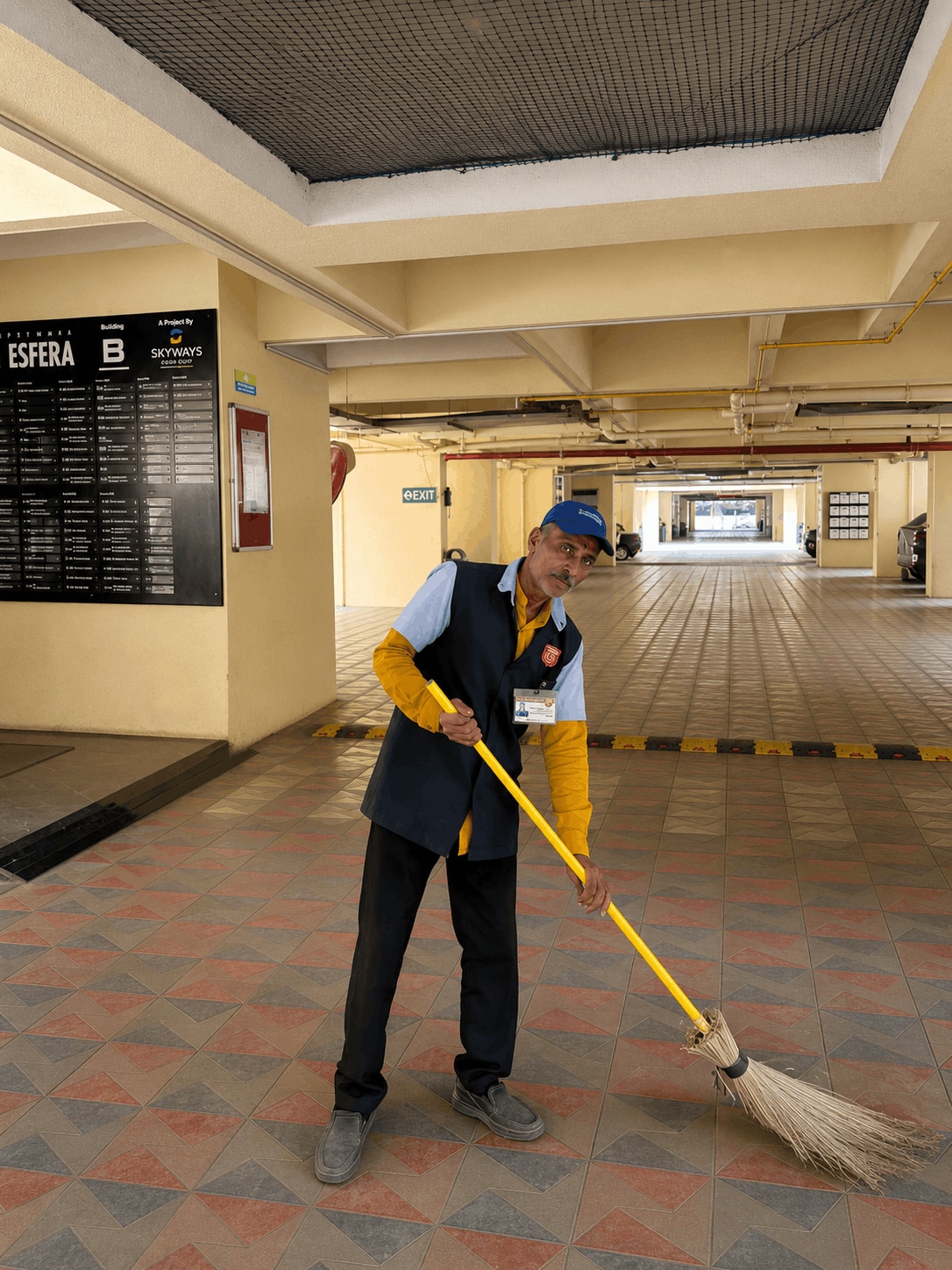 | Housekeeping Services opgun Corporate Services Pvt Ltd provides professional and reliable Housekeeping Services in Pune for corporate offices, IT companies, residential... View product → |
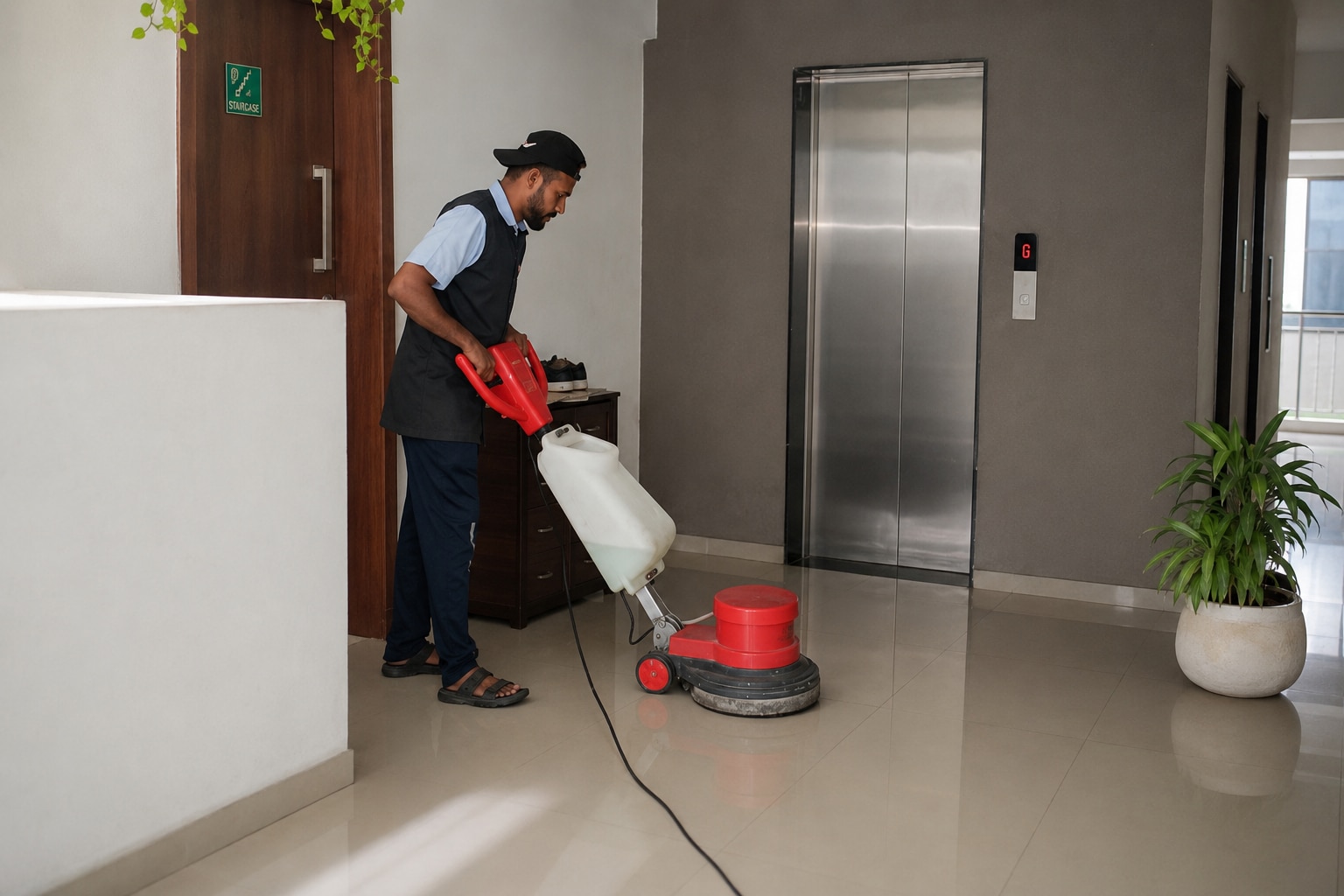 | Commercial Complex Housekeeping Services Commercial Complex Housekeeping Services Clean spaces. Better experiences. A clean environment isn’t just about appearance—it’s about creating healthier, safer, and more welcoming spaces for... View product → |
Frequently asked questions
When do housekeeping services make sense for a Hadapsar office?
Outsourcing makes sense when floor area, employee numbers, visitor traffic or operating hours exceed one cleaner’s practical coverage. A small single-floor office with fixed hours and one or two washrooms may manage with one directly employed cleaner.
Which cleaning model fits a corporate office: in-house, casual cleaner or contractor?
An in-house cleaner suits a stable routine with direct supervision. A casual cleaner may suit limited, predictable work but creates coverage and continuity risks. A contractor suits offices needing multiple cleaners, replacement staff, supervision, attendance records and defined service levels.
What should daily and periodic office cleaning cover?
Daily work should cover floors, desks and touchpoints, bins, pantry areas, washrooms and replenishment of agreed consumables. Periodic work should cover glass, high-level surfaces, upholstery, carpets, machine scrubbing, washroom descaling and other tasks listed in the schedule.
How many cleaners does an office actually need?
Set staffing from floor area, washroom count, employee and visitor traffic, operating hours, cleaning frequency and task duration. A site assessment and timed task list provide a better number than a fixed cleaner-to-employee ratio.
What should a corporate housekeeping contract measure every month?
Measure attendance, replacement response, scheduled task completion, washroom inspection records, consumable availability, complaint closure time, quality inspection scores and safety compliance.
Keywords