Effective site security depends on defined posts, controlled movement, documented handovers and evidence that the controls work during busy and quiet periods. By the end, property managers will have a practical way to design deployment, run each shift, test performance and compare providers for a Hadapsar commercial property.
Key takeaways
- Map every entrance, ramp, exit and loading bay before setting guard strength.
- Give each shift a written post order, patrol route and escalation chain.
- Separate visitor, employee, vendor and delivery checks at the gate.
- Test guards, logs, radios and emergency procedures during live operations.
Design Guard Deployment Around the Property, Not a Generic Headcount
Post count comes from simultaneous control points and risk, not the number printed on a monthly invoice. Map every entrance, basement ramp, loading bay, lift lobby, fire exit and tenant-heavy area, then identify which points need continuous presence and which need timed patrols.
Size the deployment against these site conditions:
- Number of vehicle and pedestrian entrances
- Operating hours and shift-overlap requirements
- Loading-bay and delivery volume
- Basement, parking and fire-exit exposure
- Tenant density and visitor concentration
- CCTV, access-control and alarm coverage
A single 24-hour post needs more than one person to cover weekly rest, leave, sickness, training and legal working-hour limits. Price relief guards separately; an absent guard must not leave a gate, control room or loading bay uncovered.
Test relief performance at the property because frequent rotation destroys site knowledge, while zero rotation can let familiar staff escape proper challenge.
For commercial security services for Hadapsar, request the agency’s current Private Security Agencies (Regulation) Act, 2005 licence covering Maharashtra and the operating district. GST, shop-and-establishment or labour registration does not replace PSARA authorisation.
Before awarding the contract, verify each deployed and replacement guard’s PSARA training, identity and antecedent checks, agency identification, post-order competence and handover quality. Set post-specific service levels for minimum attendance, maximum uncovered time, supervisor inspections and incident-report deadlines; “round-the-clock security” alone cannot prove coverage.
Turn Every Shift Into a Controlled Operating Routine
At shift start, incoming guards must take a documented handover before accepting responsibility for the site. The routine for commercial security guards hadapsar properties needs the same discipline at a quiet office entrance and a crowded mixed-use complex.
- Check gates, barriers, intercoms, radios, CCTV views, access readers, lighting and guard-tour devices; record faults before opening posts.
- Compare the previous shift’s incidents, expected visitors, contractor list, delivery schedule, restricted areas and outstanding keys.
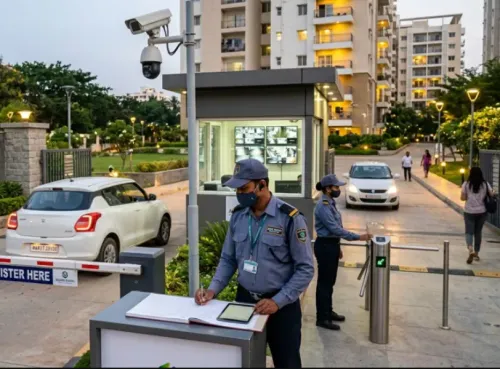
- Admit employees through their assigned credentials, register visitors only after identity and host approval, and escalate a non-responsive host instead of waving anyone through. Set an expiry time on every visitor badge.
- Match delivery vehicles to the booking, driver identity, vehicle number and delivery note. Direct them to the loading bay, control unloading, and record departure.
- Supervise two-wheeler and car movement, keep fire lanes and basement ramps clear, and challenge tailgating at barriers or doors.
- Complete timed patrols covering stairwells, fire exits, parking areas, plant rooms and boundary points. Report damage, blocked exits or suspicious activity immediately.
- Reconcile keys, badges, visitor entries, vehicle movements and incidents before handover; the outgoing guard signs only after the incoming guard accepts the record.
Use the paper register and manual barrier or key procedure when power, network or software fails. The supervisor must know who can authorise entry, preserve the time and identity details, and reconcile duplicate records when systems return.
During heavy rain, inspect waterlogged approaches and basement ramps, protect equipment, and keep temporary barriers away from exits and wet-floor hazards.
Use Workflows That Separate Employees, Visitors, Vendors and Deliveries
Give employees a fast, controlled route while putting visitors, vendors and deliveries through separate checkpoints. A commercial complex security Hadapsar operation should use lane markings, colour-coded passes and access permissions that match each group, rather than forcing everyone into one visitor queue.
- Employees: use registered access cards at dedicated pedestrian turnstiles; position a guard to challenge tailgating without stopping the entire lane.
- Visitors: require host name, mobile number, purpose and photo identification before issuing a time-limited badge. The host must confirm arrival before the visitor proceeds.
- Vendors and contractors: verify the company, work order, supervisor, tools and permitted area. Issue badges that expire at shift end and collect them at exit.
- Deliveries: direct vehicles to the loading bay, record the driver, vehicle number, consignment and receiving tenant, then release goods only against that tenant’s confirmation.
Keep delivery vehicles away from the employee entrance. Schedule recurring suppliers with pre-approved lists, but still check the vehicle and driver at every visit; a familiar van is not proof of authorised access.
Use a separate two-wheeler entry and parking exit where the layout allows. During housekeeping changeovers, courier accumulation and late-night facilities work, add a roving guard so the registration desk does not become an unattended gate.
Train guards to close the barrier after each vehicle, preserve CCTV when a tailgating attempt occurs and escalate refusals instead of waving people through.
Measure Performance and Audit the Provider During a Live Shift
A live-shift audit proves performance only when you compare planned coverage with what guards actually do. Check every post, relief arrival, patrol, access decision and incident response during a busy changeover, not during a quiet midday visit.
For business security services Hadapsar, collect this evidence on site:
- Time-stamped attendance and post-relief records, including early housekeeping entry, late-night IT staff, public holidays and parking exits.
- The deployed guard’s agency identification, identity and antecedent-check records, and proof of prescribed PSARA training.
- A current PSARA licence covering Maharashtra and the relevant operating district; GST, shop-and-establishment or labour registration is not a substitute.
- Completed visitor, vendor, delivery and vehicle logs, checked against CCTV and tenant records for missing names, tailgating or unexplained access.
- Patrol checkpoints, alarm-response times, unresolved complaints, incident reports and handover notes signed by both shifts.
- Replacement-guard records proving that relievers received the same checks, post orders and site briefing as permanent staff.
Measure coverage by occupied posts and available relief capacity, not by the guard count on the invoice. A single 24-hour post needs cover for weekly rest, leave, sickness, training and lawful working-hour limits.
Compare site retention with handover quality. Frequent rotation destroys local knowledge; zero challenge to familiar guards creates another weakness. A provider such as Topgun Corporate Services Pvt Ltd should be assessed through these site records, not agency-wide headcount or a polished supervisor presentation.
Related product
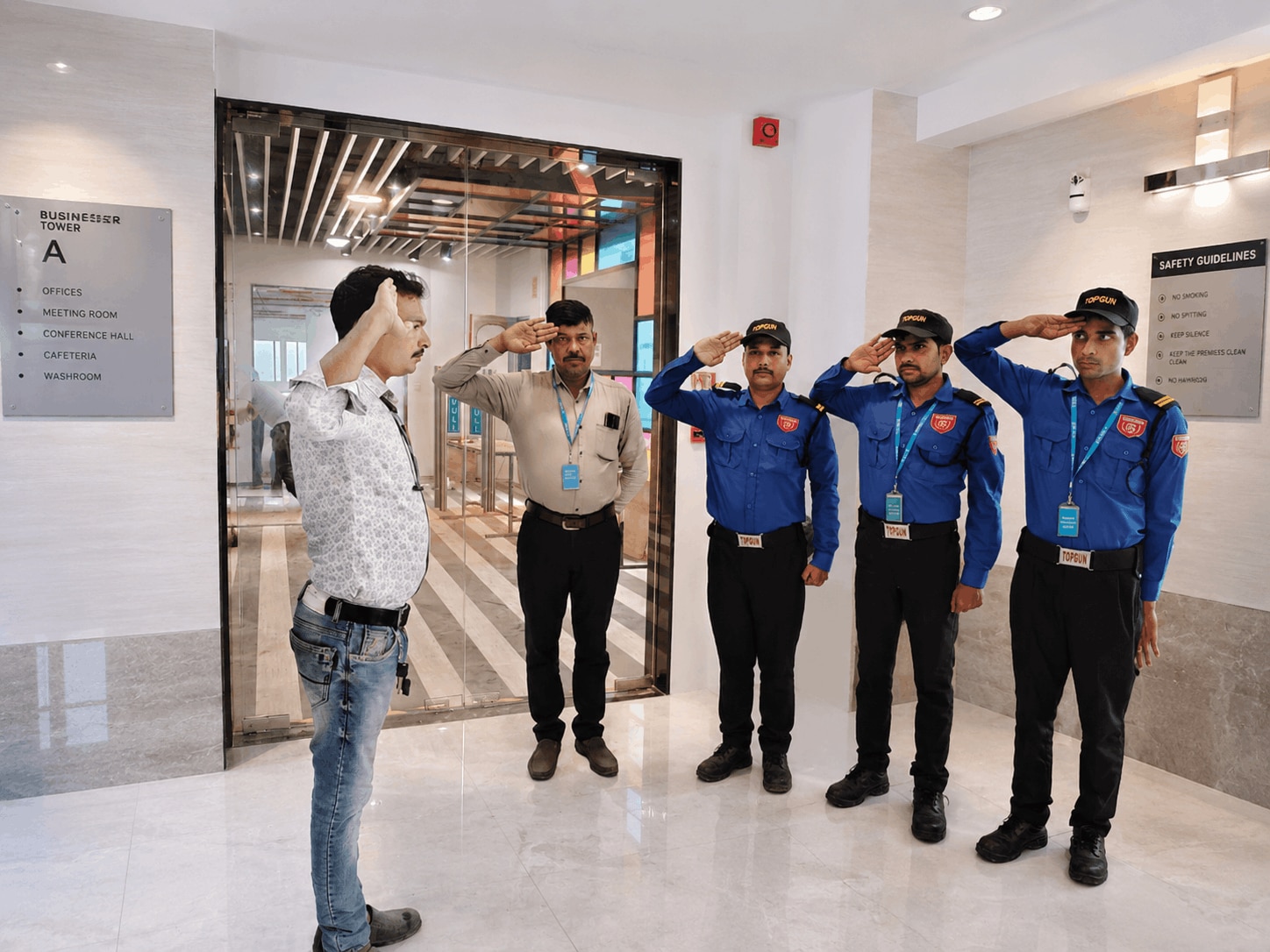 | Commercial Complex Security Services Commercial Complex Security Services Every commercial complex has hundreds of people moving through it every day—employees, visitors, vendors, and customers. View product → |
Build Resilience for Emergencies, Monsoon Conditions and System Failures
A failed access reader must not become an open gate or a locked emergency route. Keep a printed contact tree, sealed paper register, torch, spare radio batteries and authorised key list at the control room, with one named person able to approve entry during an outage.
Use this fallback sequence for power, network or software failure:
- Switch access control and intercoms to the documented manual procedure; record identity, purpose, host and time for every entry and exit.
- Maintain guard-to-guard radio contact when the network is down, and log patrols on paper if tour devices stop working.
- Keep barriers under manual control only through named keyholders; reconcile every key movement and paper entry against system records after restoration.
- Test CCTV retrieval after power changeover, including gates, lift lobbies, loading areas, stair doors, parking exits and refuse areas.
The monsoon plan must inspect waterlogged approaches and basement ramps, protect cameras and readers from rain, provide an alternate pedestrian route, and check lighting during outages. Keep wet-floor hazards, fire exits and emergency access clear; temporary barriers and stored materials must never narrow them.
For commercial security services for Hadapsar, require a current PSARA licence covering Maharashtra and the operating district. A GST, shop-and-establishment or labour registration does not replace PSARA authorisation.
A commercial complex security Hadapsar SLA should set minimum attendance, maximum uncovered-post time, supervisor inspection frequency, incident-reporting deadlines, key-record accuracy and emergency-test results. “Round-the-clock security” alone cannot be audited.
Frequently asked questions
How do you decide the right guard deployment for a commercial property in Hadapsar?
Map entrances, basement ramps, loading bays, lift lobbies, fire exits and tenant-heavy areas. Assign continuous posts to exposed control points and timed patrols to lower-risk areas.
What should every commercial security guard shift include?
Use written post orders, a handover log, scheduled patrols, radio checks, incident escalation rules and a supervisor review before the shift closes.
How should a commercial complex separate visitors, employees, vendors and deliveries?
Use separate registers or digital workflows, verify identity and authorisation, issue visitor passes, record vehicle details and confirm delivery recipients before entry.
How can you audit business security services during a live shift?
Check post attendance, patrol timestamps, gate records, radio response, CCTV observation and incident handling without announcing every test in advance.
Keywords