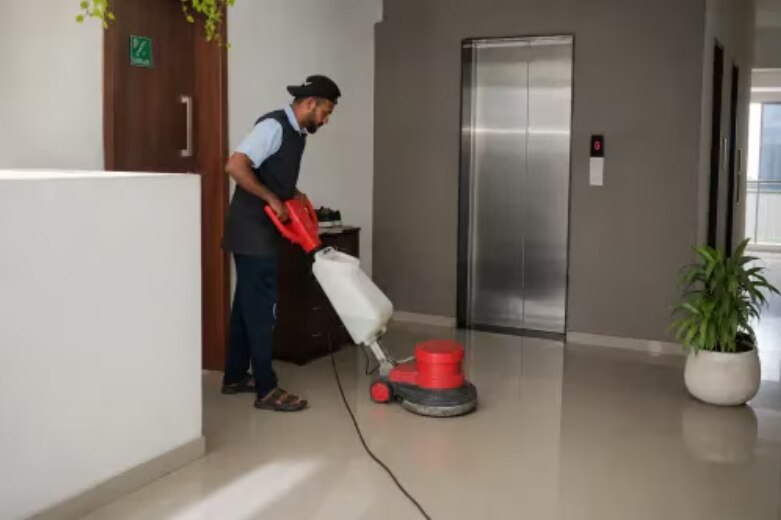
A commercial complex needs more than cleaners moving through visible areas with a mop and bucket. Delivery depends on an accurate site survey, time-based task planning, trained staff, surface-appropriate methods, safety controls and inspection records. By the end, you will be able to map the full service cycle and compare a housekeeping proposal against the actual demands of your complex.
Key takeaways
- Survey footfall, food outlets, washrooms, parking and access before pricing.
- Assign zone routes and task frequencies to each shift.
- Use surface-specific methods for floors, glass, washrooms and waste areas.
- Require inspection records, corrective actions and access-control logs.
How the site is surveyed and the housekeeping scope is defined
Commercial complex housekeeping services in Undri should start with an asset-and-activity survey, not a single square-foot rate. A rate ignores whether work happens in a quiet office or a crowded complex with food outlets, parking decks and high-use washrooms.
Record the site in measurable terms:
- Floor area, entrance and lobby size, corridor length, lift and staircase count, parking levels, glazing, granite or ceramic surfaces, carpets and tenant offices.
- Washrooms by type and count, food outlets, waste rooms, loading bays, service corridors, common rooms and service-lift routes.
- Restricted-access areas, tenant working hours, deliveries, events and peak occupancy periods.
Convert those findings into labour hours, equipment requirements, consumable quantities and task frequencies. The scope must separate routine cleaning, deep cleaning, washroom attendant service, consumable replenishment, spill response, waste handling and post-event cleaning.
Ask these questions before accepting a proposal:
| Item | Ask for | Why it matters |
|---|---|---|
| Routine work | Zones, shift frequency and washroom checks | Daily complaints cannot replace planned coverage |
| Periodic work | Machine scrubbing, high-level glass, carpet extraction and parking-deck cleaning dates | A low headcount can exclude labour-intensive tasks |
| Special controls | Monsoon entrance water, food grease, drainage limits, machine access and areas unavailable during working hours | The cheapest rate may omit equipment, night work or specialist labour |
For facility housekeeping undri, request separate pricing for labour, machines, chemicals and periodic work. A low per-square-foot rate is incomplete if it excludes relievers, high-level cleaning, spill response or post-event restoration.
How shifts, routes and task schedules are organised
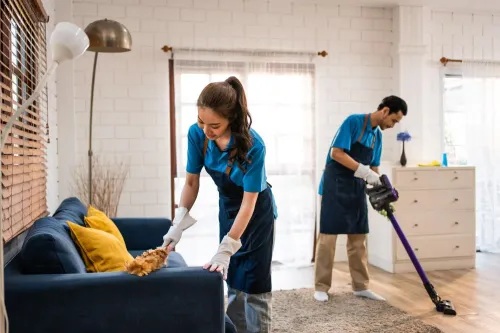
A supervisor converts the roster into completed rounds: assign zones, check attendance, issue equipment, confirm uniforms and PPE, and arrange relief for weekly offs, leave or absence. Labour deployment follows work content and time windows, not a minimum headcount.
- General cleaners cover routine floor and common-area work.
- Washroom attendants monitor high-use toilets and replenishment.
- Machine operators handle scrubbers, vacuums and extraction equipment.
- Glass or façade specialists perform access-controlled exterior work.
- Peak-hour support responds to footfall, spills, events and tenant moves.
Each handover records unfinished work, spills, blocked fixtures, damaged assets, stock shortages and restricted areas. The incoming team accepts these items before starting its route, while the supervisor closes completed rounds through checklists or a digital log.
The schedule separates operating-hour response from planned work:
| Cadence | Scheduled work |
|---|---|
| Continuous | Visible spill response, touchpoint wiping, litter removal and washroom checks |
| Each shift | Lobbies, lifts, staircases, corridors, washrooms, waste movement and parking observations |
| Daily | Mopping, vacuuming, consumable replenishment and waste-room cleaning |
| Weekly | Machine scrubbing, high-level dusting, carpet extraction and upholstery cleaning |
| Monthly | Façade or glass work and parking-deck cleaning |
Routes change around tenant working hours, customer footfall, deliveries, events and food-outlet peaks. Teams clean busy lobbies and washrooms during quieter intervals, move waste after delivery windows, and reserve low-traffic periods for noisy machines or blocked-area work.
This operating discipline is central to facility housekeeping in Undri and prevents daily complaints from displacing periodic tasks in housekeeping services in Undri.
What gets cleaned in each zone and with which method
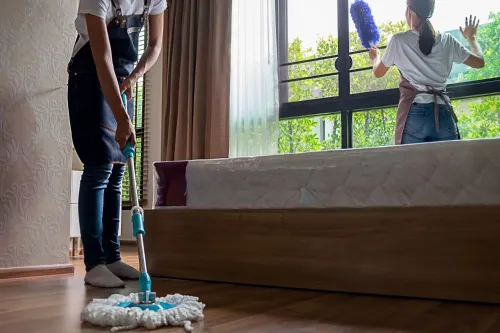
Entrances and lobbies need mat shaking, litter removal, spot mopping and glass cleaning; corridors and staircases need dust removal, edge cleaning and damp mopping. Lifts receive vacuuming, floor cleaning and stainless-steel treatment, while common rooms, service corridors and loading bays receive surface-specific dusting, sweeping and spill response.
Washroom logs record:
- Odour, visible soil, wet or contaminated floors and blocked fixtures
- Soap, tissue and hand-dryer availability
- Last-service time and any corrective action
High-occupancy washrooms may need checks every 30 to 60 minutes during peak periods. Staff remove visible soil before applying a compatible disinfectant, then keep the surface wet for the label’s stated contact time; spraying and immediately wiping does not deliver the labelled disinfection performance.
| Zone | Surface or soil | Method and equipment |
|---|---|---|
| Entrances and lobbies | Glazing, granite, tracked mud | Glass tools and squeegees; neutral cleaner for granite; wet-vacuum or mop for mud |
| Corridors and stairs | Dust, tile soil, narrow routes | Tile-safe cleaner, colour-coded mop heads and walk-behind machines |
| Lifts | Stainless-steel panels and floor marks | Stainless-steel cleaner, lint-free cloths and controlled damp mopping |
| Carpets and common rooms | Embedded soil and fabric dust | Vacuuming, extraction and upholstery tools |
| Parking, loading and waste points | Oil, litter and heavy soil | Mechanical scrubbing, degreasing, sweeping and contained waste transfer |
Colour-coded buckets, mop heads, cloths, brushes and storage locations must separate toilets, food-service areas, offices and common floors. A commercial cleaning undri plan uses low-moisture methods on painted walls. For complex cleaning services undri, choose a walk-behind scrubber where corridors, ramps, drainage or charging access make a ride-on machine unsafe.
How safety, waste and access controls work during service
A wet route becomes a hazard when people can enter it before the floor is safe. Use barricades, visible warning signs and controlled access, then reopen the area only after a supervisor checks the surface; one small cone at the edge of a long wet route is not enough.
- Cords and machine cables are routed away from walkways and water.
- Charging points and electrical equipment stay dry and isolated during cleaning.
- PPE matches the task, including gloves, eye protection and slip-resistant footwear.
- Chemical containers show the product name, dilution instructions and hazard label.
Keep safety data sheets available to the team. Store acidic descalers, chlorine products, solvents and alkaline degreasers separately; chlorine mixed with acids can release toxic chlorine gas. Keep chemicals away from public areas and food-service zones.
The waste plan for commercial cleaning in Undri names source-segregated streams, collection times, internal transfer routes, temporary storage capacity, spill procedures and handover records. Mixed waste at collection defeats segregation and creates odour, pest and compliance problems.
During monsoon, increase controls for tracked mud, standing water, blocked drains, damp odour, slippery algae and saturated entrance mats. Inspect and replace mats before they become slip hazards.
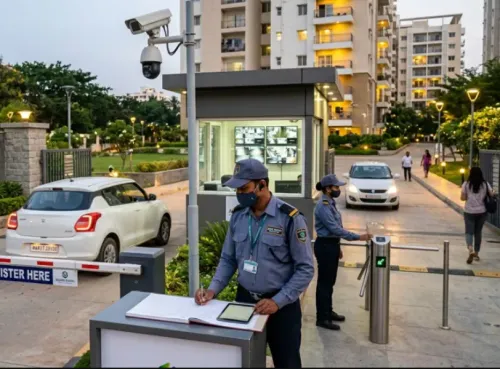
The security interface records identity checks, contractor sign-in and sign-out, access-card and key custody, after-hours access, found-property handling and approval for tenant offices or restricted rooms. Housekeepers do not receive uncontrolled access.
Specialist work requires trained personnel, suitable equipment and task controls for sharps, bodily-fluid spills, manual handling, working at height and powered equipment. This is essential to safe complex cleaning services in Undri.
How completion is inspected and a service provider is assessed
Attendance proves presence, not completion. A supervisor must inspect sampled zones against written standards, record defects, assign corrective actions and escalate anything unresolved by the deadline.
1. Set the inspection method in the service-level agreement. Define inspection frequency, sample size, scoring rules, exclusions, response times, escalation contacts and corrective-action deadlines. Track zone-based inspection scores, washroom stock-outs, complaint closure time, repeat complaints, missed periodic tasks, chemical or equipment incidents, waste handover records and rectification photographs.
2. Check whether the staffing plan matches work content and time windows. It should name supervisors, general cleaners, washroom attendants, machine operators, specialists and relievers for weekly offs and leave. Confirm peak-hour coverage; one absence or tenant event can otherwise leave spills and washroom demand unattended.
3. Test the equipment and supply plan. Equipment lists must state machine type, operator coverage and breakdown-response time. Consumables need replenishment thresholds, while machine scrubbing, high-level dusting, glass cleaning, carpet extraction, upholstery work and parking-deck cleaning require separate schedules and prices.
- Scope and named zones
- Daily, periodic and reactive frequencies
- Peak-hour and event coverage
- Safety controls and training records
- Waste handover records
- Access, key and contractor sign-in rules
- Proof of rectification
A Pune provider such as Topgun Corporate Services Pvt Ltd is worth assessing on whether its staffing, supervision, security coordination, equipment, training and reports fit the complex’s actual operating pattern. That is the practical test for facility housekeeping Undri, not a generic promise of cleanliness.
Related products
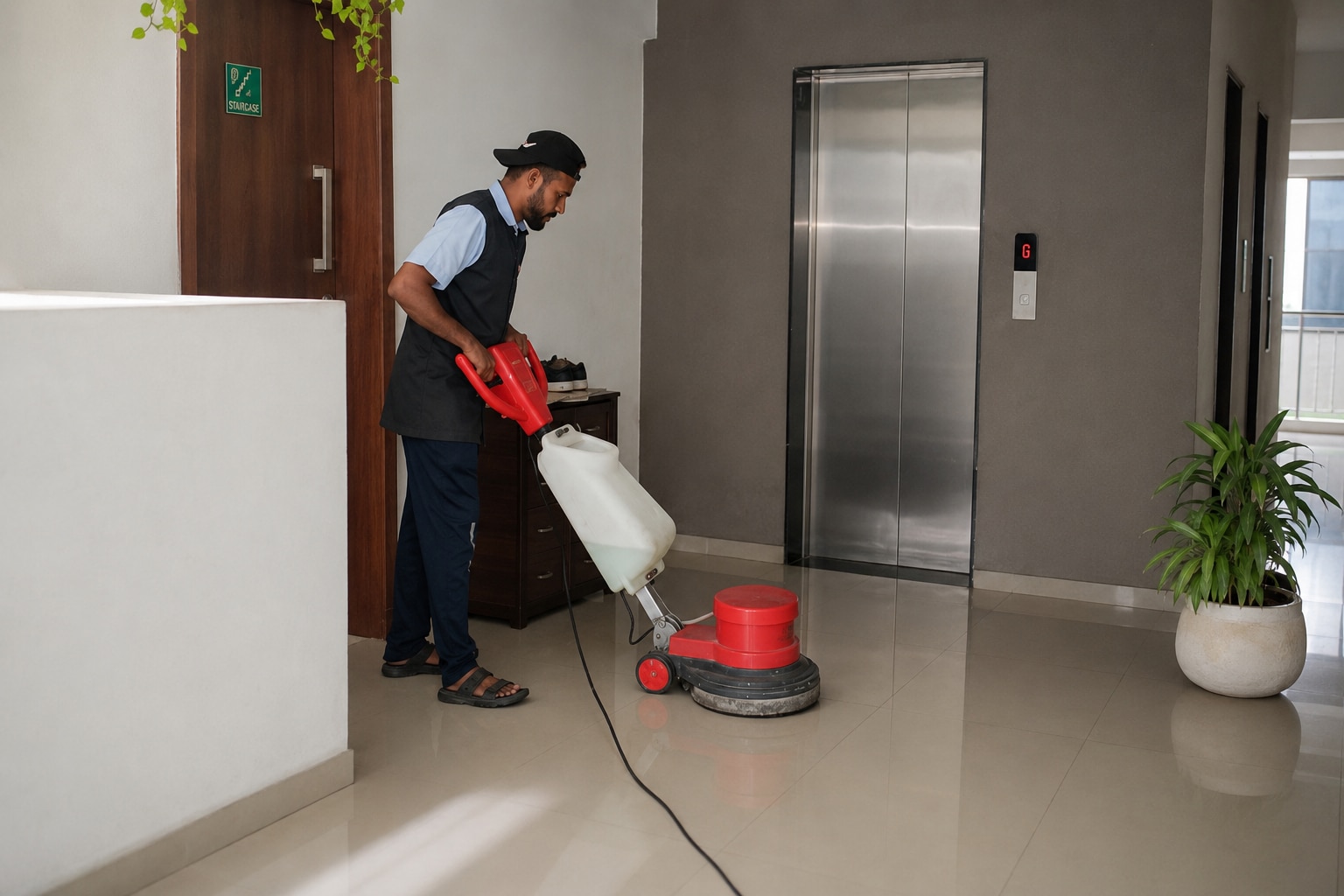 | Commercial Complex Housekeeping Services Commercial Complex Housekeeping Services Clean spaces. Better experiences. A clean environment isn’t just about appearance—it’s about creating healthier, safer, and more welcoming spaces for... View product → |
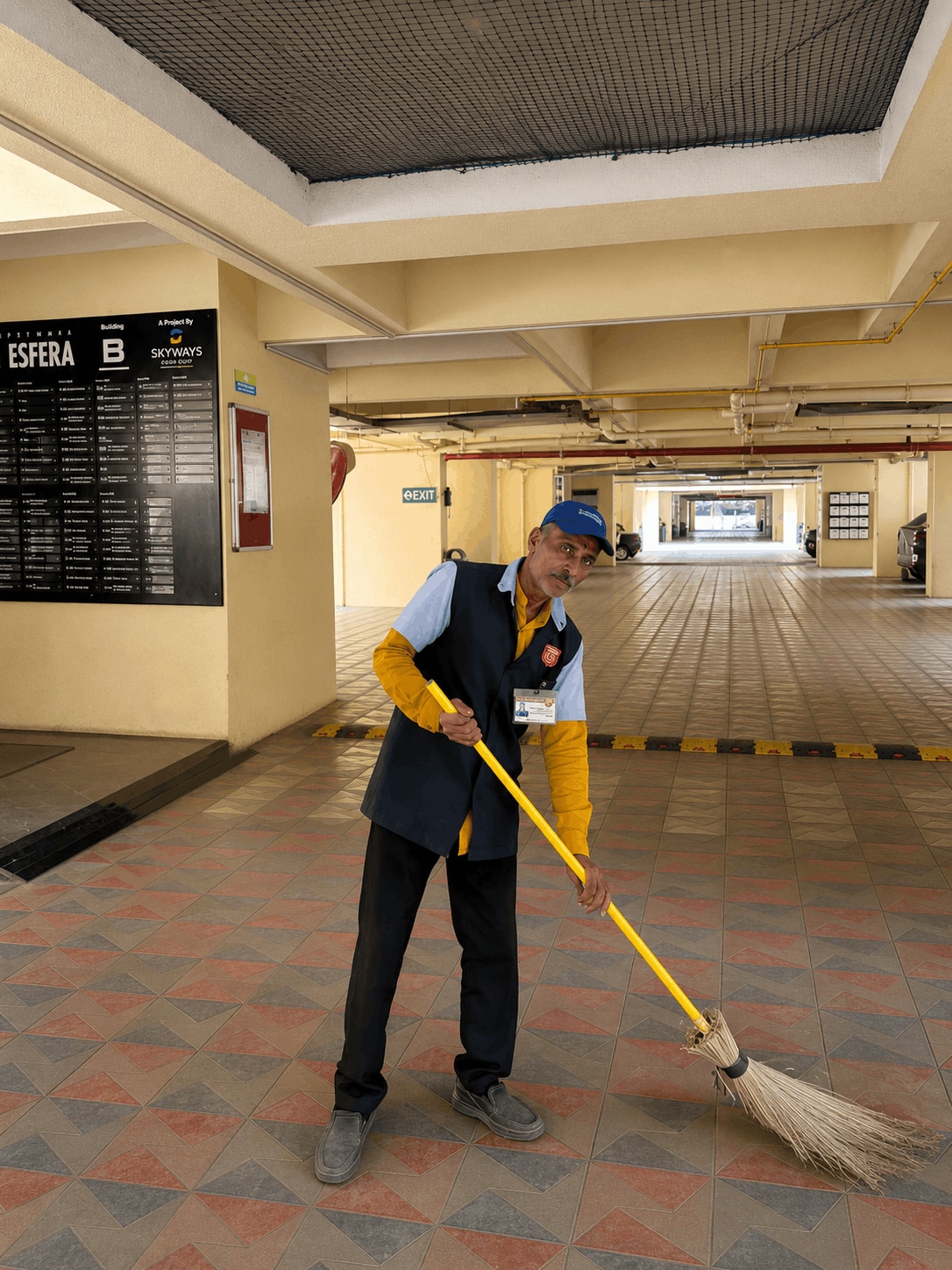 | Housekeeping Services opgun Corporate Services Pvt Ltd provides professional and reliable Housekeeping Services in Pune for corporate offices, IT companies, residential... View product → |
Frequently asked questions
How is a housekeeping scope defined for a commercial complex in Undri?
Survey the complex by zone, recording floor areas, footfall, food outlets, washrooms, parking decks, access points, operating hours and waste loads before setting the scope.
How are shifts, routes and cleaning schedules organised?
Assign staff to defined zones and routes, then set daily, periodic and event-based tasks around occupancy patterns and peak traffic.
What cleaning methods are used in different commercial complex zones?
Match the method to the surface and risk: damp mopping for hard floors, glass-cleaning tools for glazing, disinfectant cleaning for washrooms and segregated collection for waste areas.
How are safety, waste and access controls managed during housekeeping?
Use warning signs, suitable personal protective equipment, waste segregation, controlled chemical storage and authorised-access records during service.
How do you inspect housekeeping completion and assess a provider?
Check each zone against a task checklist, record defects and rework, review attendance and access logs, and assess response time, supervision and inspection evidence.
Keywords