
A Pimple Nilakh industrial site needs security arranged around its actual gates, loading areas, blind perimeter sections, shifts and emergency routes—not around a guard-count quotation alone. By the end, you will be able to map the setup, test daily controls, compare service models and specify evidence for every important security activity.
Key takeaways
- Map pedestrian, vehicle, loading, utility and fire-lane routes before assigning posts.
- Require visitor, contractor, vehicle and material records at the gatehouse.
- Link patrols, CCTV and access control through shift handover logs.
- Compare licences, training, supervision, incident reporting and response coverage before appointing a provider.
What a Pimple Nilakh industrial security setup covers from gate to perimeter
A guard-per-shift quotation is not a security plan. For industrial site security in Pune, map every route from a Pimple Nilakh boundary to production before assigning posts: pedestrian and vehicle gates, reception, loading bays, contractor entrances, stores, utility rooms, roof access, parking, and fire lanes.
1. Mark each access point and record who uses it, during which shift, and what can pass through it. Separate employee entry, visitor registration, contractor verification, delivery-document checks, vehicle inspection, outgoing-goods control, key control, and emergency communication in the post orders.
2. Trace routes that bypass reception. Include blind perimeter sections, damaged fencing, unlit corners, adjacent roads, vacant plots, parked vehicles, drainage edges, and doors through which an intruder could reach production without crossing the main gate.
3. Set coverage objectives for each zone. Specify face capture at gates, number-plate views, perimeter detection, loading-bay oversight, and evidentiary views rather than buying cameras by count; record time synchronisation, health checks, footage retention, export permission, and authorised viewers.
4. Check operational hazards before staffing: delivery queues, shift changes, lunch breaks, low-occupancy night hours, restricted machinery areas, hazardous stores, and blocked fire or ambulance routes.
5. Put the exact police station, fire station, ambulance route, gate description, site coordinates, and named client contacts on the emergency card. Guards can raise alarms, guide evacuation, clear responder access, and log events; they cannot replace statutory fire systems or trained fire personnel.
How the gatehouse controls people, vehicles and materials
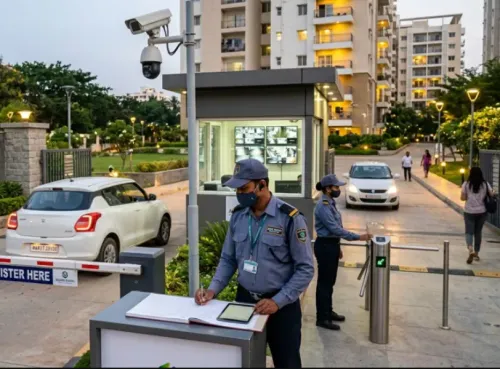
A gatehouse fails when one guard handles a delivery while the pedestrian entrance stands open. Factory security services in Pimple Nilakh should separate people, vehicle, document and key-control duties in the post orders, with relief during shift changes and meal breaks.
- Employees: Check the access card or biometric record, deny entry on a mismatch, and log repeated failures for the supervisor. Do not treat a uniform as proof of identity.
- Contractors: Verify the approved work order, identity document, company, work area and permit. Issue a time-limited badge, record tools brought inside, and recover the badge at exit.
- Visitors: Confirm the host before admission, record name, organisation, phone number, arrival time and purpose, then issue a visible visitor pass. Keep unescorted visitors out of production, stores and utility rooms.
- Delivery vehicles: Match the driver, vehicle registration, purchase order or delivery challan and expected load. Inspect the cabin and cargo area under the site rule, direct the vehicle to the assigned bay, and record arrival and departure.
- Outgoing goods: Release material only against an authorised gate pass listing item, quantity, serial number and destination. Match the goods to the document before opening the barrier.
Keep separate registers or linked digital records for pedestrians, vehicles, visitors, keys and materials. The gatehouse must also control spare keys, maintain clear fire lanes, call the site contact during discrepancies, and preserve the record for investigation rather than allowing a verbal override.
How patrols, CCTV and access control work together across shifts
| Control | Primary duty | Busy period | Low-occupancy period |
|---|---|---|---|
| Static post | Hold the gatehouse, pedestrian entrance or critical perimeter point | Keep entry lanes, deliveries and contractors moving without abandoning the post | Maintain continuous observation and call for relief before leaving |
| Mobile patrol | Check fences, yards, loading areas, fire routes and restricted doors | Cover blind spots while fixed posts handle queues | Increase perimeter checks and investigate lights, alarms or unusual movement |
| CCTV monitoring | Watch camera views, acknowledge alarms and direct the nearest response | Track queues, vehicle movements and tailgating at access points | Detect intrusion, door-forcing and equipment activity |
| Access-control administration | Issue, suspend and reconcile cards, visitor records and keys | Update permissions and resolve rejected credentials | Review exceptions, expired access and unresolved discrepancies |
The schedule for security patrols for industrial sites must protect shift change, lunch breaks and night hours, not just the busiest production window. Set patrol routes with electronic checkpoints, vary timings enough to avoid predictability, and require a documented handoff between outgoing and incoming teams.
A gatehouse guard handling a delivery cannot also watch a pedestrian gate or CCTV wall. Assign relief before that conflict occurs. Post orders must state who responds when a guard is late, absent, unfit or pulled into an incident, how quickly relief arrives, and the maximum time a critical post may remain unmanned.
At Pimple Nilakh sites, review alarm acknowledgements, zone-arrival times, completed checkpoints, CCTV uptime, access-card discrepancies and post absenteeism at every shift review. Keep shift lengths and breaks realistic; fatigue at a night gate or monitoring desk turns a layered system into an unattended one.
How industrial incidents are verified, escalated and recorded
A guard’s response must protect people first, verify the facts, summon the right help, and create a time-stamped record. Industrial security services at Pimple Nilakh sites need written post orders for each event, not improvised decisions.
1. Acknowledge the alarm, identify its zone, and check CCTV or the nearest safe view. Send a patrol only when conditions are safe; notify the supervisor if the alarm persists, repeats, or shows intrusion.
2. For a forced gate, isolate the area, preserve CCTV footage, check for injury or entry, and call the supervisor and police through the site’s approved contact route. Do not touch a cut lock or disturbed object.
3. For missing inventory, secure the store and dispatch points, freeze relevant movement, compare the stock, gate and vehicle records, and escalate to the client’s named contact. Record the item, quantity, batch or serial number, last confirmed location, and witnesses.
4. For an accident, fight, or medical emergency, separate people without creating further risk, request ambulance or police support, provide only authorised first aid, and keep bystanders away. Never move an injured person unless immediate danger requires it.
5. For fire or smoke, raise the alarm, call the correct fire service, guide evacuation, keep fire lanes clear, and control responder access. Guards do not replace statutory fire systems, trained fire personnel, inspections, or the emergency plan required under Maharashtra’s 2006 fire-safety law.
6. Record times, actions, names, messages, photographs, and handover details. The emergency card must show the exact police station, fire station, ambulance route, gate coordinates, and client contacts for that address.
How to compare and appoint a factory security service in Pimple Nilakh
A buyer asking what industrial security services for look like in pimple nilakh needs evidence from the site, not a guard-per-shift quote. Start with a risk survey covering gates, loading bays, stores, utility rooms, roof access, parking, blind perimeter sections and routes from adjacent roads or vacant plots.
Request these records before appointment:
- PSARA licence showing validity, permitted geographical area and the exact agency named in your contract.
- A mobilisation file for every guard and supervisor: identity and address evidence, police or antecedent-verification status, training, fitness information and deployment history.
- Site-specific post orders separating pedestrian entry, visitor registration, delivery checks, vehicle inspection, key control, CCTV monitoring and emergency communication.
- A relief plan naming replacement staff for absence, lunch, shift change and night duty.
Industrial security services pimple nilakh proposals become easier to compare in this table:
| Check | Workable service | Nominal deployment |
|---|---|---|
| Staffing | Named supervisors, trained relievers and attendance records | One uniformed guard with no relief plan |
| Performance | Patrol checkpoint completion, log completeness, alarm response, CCTV uptime and report-submission time | “Zero incidents” as the only KPI |
| Contract | Defined posts, shifts, equipment, escalation, audit rights, corrective-action deadlines and service credits | Vague duties and no remedy for absenteeism |
| Fire boundary | Guards raise alarms, clear access and guide responders; statutory systems remain the occupier’s duty | Guards treated as a substitute for fire protection |
Topgun Corporate Services Pvt Ltd should be assessed against the same records, KPIs and contract controls as every competing bidder.
Related product
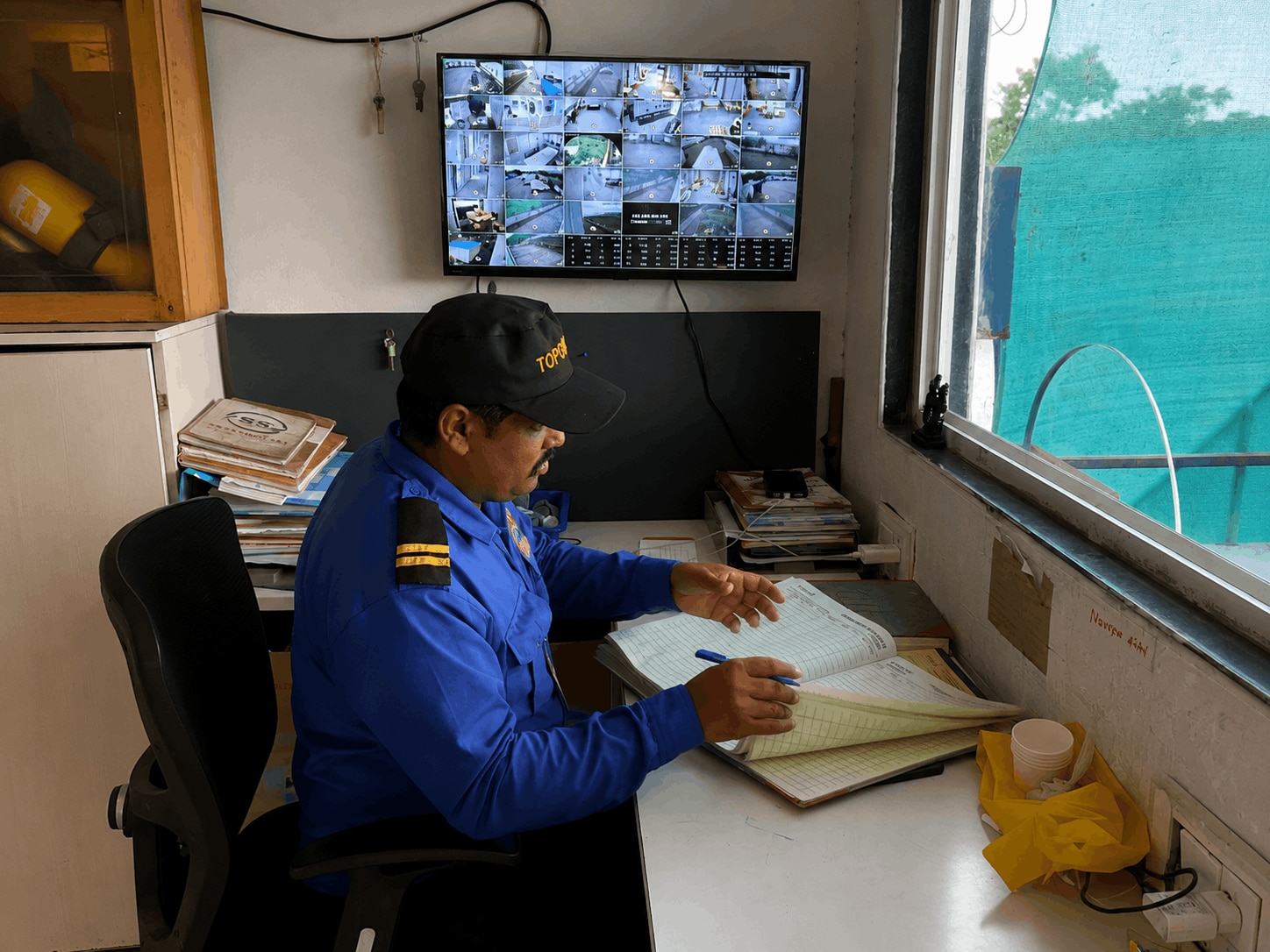 | Industrial Security Services Industrial sites are busy places. Trucks are constantly moving, employees work in shifts, materials come and go, and there are plenty of areas that... View product → |
Frequently asked questions
What does an industrial security setup in Pimple Nilakh cover?
It covers the boundary, pedestrian and vehicle gates, reception, loading bays, contractor entrances, stores, utility rooms, roof access, parking and fire lanes.
How should a factory gatehouse control people, vehicles and materials?
Use separate visitor, employee, contractor, vehicle and material processes, and record identity, authorisation, entry time, exit time and movement documents.
How do patrols, CCTV and access control work together?
CCTV detects or verifies activity, access control limits entry, and patrols physically check locations that cameras cannot fully confirm. Shift handovers connect the three.
How should an industrial security incident be verified and recorded?
Verify the location and facts, preserve CCTV and access records, notify the designated escalation contacts, and record the time, people involved, action taken and closure.
How do you compare factory security services in Pimple Nilakh?
Compare post coverage, supervisor presence, guard training, licence documentation, patrol methods, emergency escalation, reporting quality, replacement arrangements and site-specific deployment plans.
Keywords