
A warehouse needs more than swept floors and clean toilets: forklifts, loading docks, pallet racks, waste streams and shift changes create operational risks that a standard cleaning contract may not cover. You will be able to distinguish the three service models, write a verifiable scope of work and compare Handewadi quotations on safety, coverage, equipment and accountability rather than headcount alone.
Key takeaways
- Choose housekeeping when cleaning must follow warehouse safety and operating controls.
- Separate floor cleaning from spill response, waste removal and high-level dusting.
- Put task frequency, access rules and measurable service levels in the scope.
- Compare quotations by staffing, supervision, equipment, consumables and compliance records.
Which warehouse cleaning model matches your operation?
Choose an operational housekeeping package when cleaning must support warehouse control, not merely leave floors presentable.
| Option | Scope and staffing | Supervision, equipment and accountability |
|---|---|---|
| In-house cleaner | Usually one or two employees handling routine floors, toilets and waste during assigned hours | Limited cover during leave or night shifts; equipment, chemical control and reporting remain your responsibility |
| Conventional cleaning contractor | Task-defined work such as floor scrubbing, façade cleaning, deep cleaning or post-construction cleanup | Contract supervisor visits periodically; the scope often excludes shift handovers, dock debris, waste-point control and operational escalation |
| Warehouse housekeeping provider | Continuous or shift-based coverage across aisles, loading docks, staging areas, battery-charging zones, toilets, offices and external yards | Supervisor inspections, handover records, suitable machinery, labelled chemicals, consumable control, unsafe-condition reports and agreed response times |
For a warehouse with forklifts, pallet racking, dock levellers or 24-hour loading, compare coverage against traffic patterns rather than square metres. A cleaner who works without pedestrian segregation or equipment lockout rules can create a collision, spill or contamination risk while trying to improve appearance.
The search phrase housekeeping services for warehouses handewadi describes this broader operating role. Warehouse cleaning services handewadi may suit a site needing scheduled scrubbing, high-level dust removal or deep cleaning, but the specification must state who clears packaging waste, keeps fire exits unobstructed and escalates leaks or damaged building fabric.
Choose the operational model if you need daily records and replacement cover. Require a chemical register, safety data sheets, dilution instructions and labelled storage; unidentified liquids in unmarked bottles are a control failure.
What must be cleaned without disrupting warehouse safety?
A warehouse floor is safe to clean only when vehicles, stock and equipment remain protected. Divide the scope into storage aisles, pedestrian routes, loading docks, staging areas, battery-charging points, toilets, offices, waste-compaction points and external yards. A normal commercial checklist that says “clean floors” will miss dock debris, damaged cartons and blocked fire exits.
| Zone | Task-based cleaning contractor | Operational warehouse housekeeping |
|---|---|---|
| Storage aisles | Sweep and mop during an agreed shutdown | Clean around racking, inspect ledges, report unstable loads and keep sprinkler discharge clear |
| Docks and vehicle routes | Remove visible dirt and packaging | Control pedestrian segregation, coordinate with forklift movements and respond to spills |
| Equipment and waste areas | Clean accessible surfaces | Clean around conveyors and dock levellers, control waste, protect electrical equipment and escalate defects |
A buyer comparing warehouse cleaning services handewadi should require these controls in the method statement, not merely in induction training:
- Never climb pallet racking or move stock without written authorisation.
- Keep wet equipment away from cartons, labels, charging points and electrical panels.
- Maintain unobstructed aisles, fire exits, extinguishers and emergency equipment.
- Use barriers, warning signs and agreed cleaning windows around forklifts and loading activity.
- Keep a chemical register, Safety Data Sheets, dilution instructions and labelled storage; reject unidentified liquids in unlabelled bottles.
- Record leaks, damaged building fabric, unsafe conditions and unresolved spills for supervisor escalation.
Insist on inspection records naming the zone, task, time, operative and corrective action. That makes housekeeping accountability visible instead of treating cleaning labour as completed work.
How should you build the cleaning schedule and scope of work?
Set frequency by operational risk, not square metres. Forklift traffic, pallet movement, dust generation, storage height and operating shifts determine how often each zone is cleaned and when work can occur. A 24-hour loading facility needs staggered coverage; a low-traffic storage building may need fewer attendance hours but still requires scheduled inspections.
Divide the scope into separate zones so a single “warehouse cleaning” line cannot hide missed work:
- Each shift: remove packaging waste, inspect pedestrian routes, fire exits, loading docks and staging areas, and respond to spills.
- Daily: sweep or scrub traffic aisles, dock levellers, toilets, offices, dispatch areas and battery-charging zones. Record leaks, damaged floors and blocked access.
- Weekly: clean rack bases, ledges, conveyors, cobwebs and waste-compaction points, adjusting frequency upward where dust settles visibly.
- Monthly or during a planned shutdown: perform high-level cleaning above racking, inspect external yards and deep-clean neglected surfaces.
For housekeeping services for warehouses Handewadi, specify cleaning windows around vehicle movements and shift handovers. State who isolates equipment, controls pedestrian segregation and supplies access equipment for high storage; never permit unplanned work near live forklifts or charging stations.
Include separate staffing for each shift, a supervisor’s inspection record, chemical dilution instructions and response times for spills and unsafe conditions. A contractor offering only periodic floor cleaning is not covering continuous warehouse housekeeping.
How can you compare Handewadi quotations beyond the monthly fee?
Compare quotations by what they control, document and guarantee—not by the monthly fee. A low figure often excludes machines, chemicals, supervision or absence cover, leaving you to pay for warehouse failures later.
| Quote item | Evidence to request | Cost risk if absent |
|---|---|---|
| Equipment | Machine list, ownership, battery and repair responsibility; confirm industrial scrubber-driers, vacuums, ladders and access equipment | Domestic-grade machines fail under dust, pallet debris and long shifts |
| Consumables | Chemical register, Safety Data Sheets, dilution instructions, storage rules, PPE and replenishment responsibility | Unlabelled decanted liquids create exposure and contamination risks |
| Staffing | Shift roster, headcount, supervisor presence, attendance records and inspection frequency | One cleaner cannot cover loading bays, toilets, routes and dispatch zones reliably |
| Compliance | Applicable contractor licence, wage and attendance records, Provident Fund and Employees’ State Insurance evidence, identity checks and statutory-payment proof | Labour liability remains even when cleaning quality appears acceptable |
| Replacement cover | Named notice process, trained reserve staff and site-induction records | An unfamiliar worker can enter forklift routes or restricted areas unsafely |
For outsourced housekeeping Handewadi, require every replacement to complete site induction, PPE verification and acknowledgement of pedestrian routes, emergency exits, spill kits, battery-charging rules and restricted zones before starting. Prohibit unplanned substitutions.
Topgun Corporate Services Pvt Ltd belongs on the same evidence-based comparison: ask for the named supervisor, equipment responsibility, chemical controls and absence-cover process in writing. Documents prove governance, not cleaning quality, so link payment to completed inspections and recorded corrective actions.
Related product
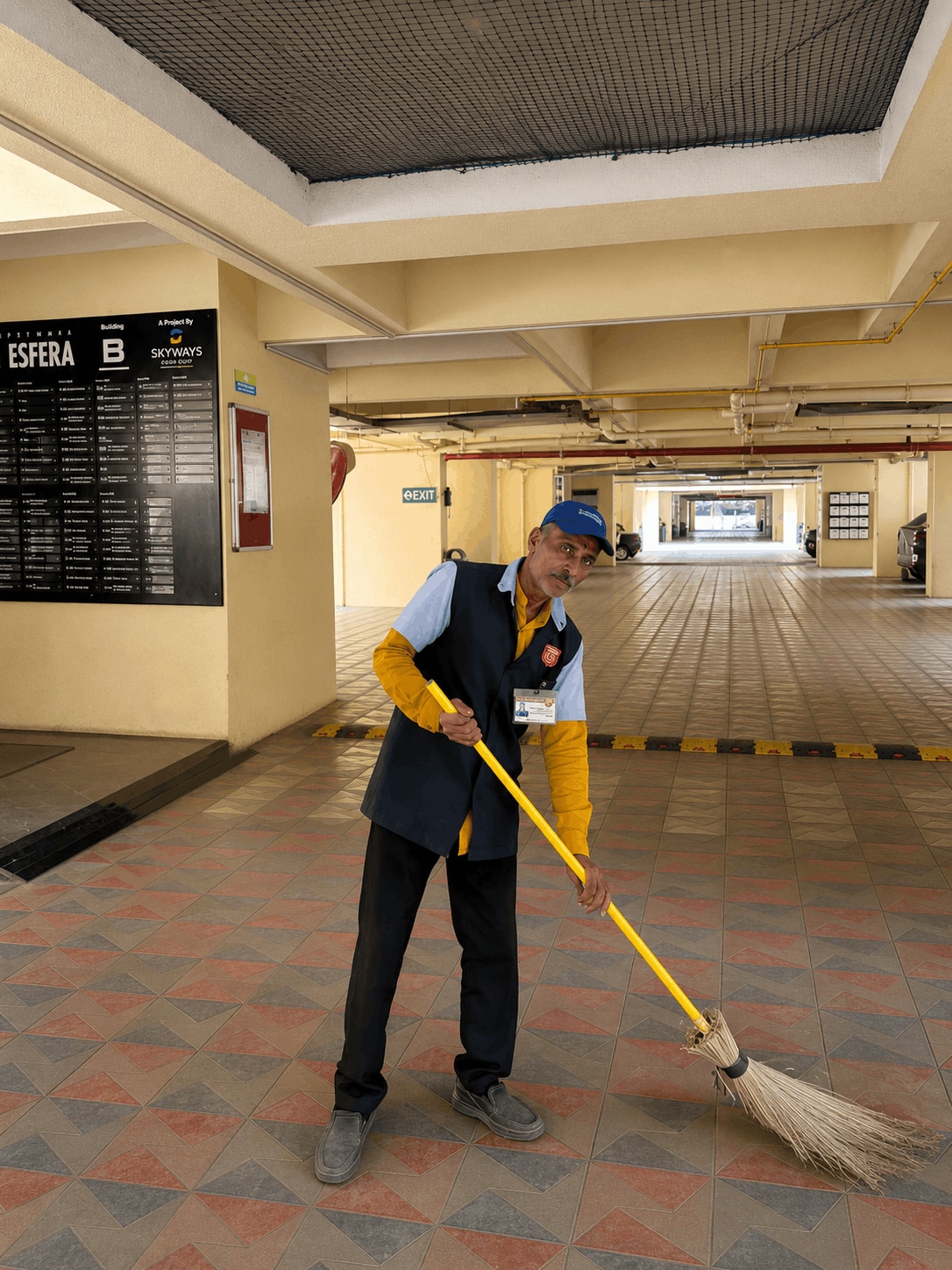 | Housekeeping Services opgun Corporate Services Pvt Ltd provides professional and reliable Housekeeping Services in Pune for corporate offices, IT companies, residential... View product → |
Which service levels prove that the warehouse is being maintained?
A warehouse is being maintained only when the contract records completed work and controls operational exceptions, not merely cleaner attendance. Require zone-based checklists covering floors, aisles, docks, toilets, waste points and staff areas, with the cleaner’s name, shift, time and supervisor verification.
The phrase warehouse cleaning services handewadi should lead to an outcome-based specification. A conventional cleaning contractor may report hours worked; an operational housekeeping provider must show what was completed, what failed and who closed the failure.
| Metric | Evidence to review | Service-level measure |
|---|---|---|
| Completed work | Dated zone checklist and inspection score | 100% of scheduled tasks recorded; missed tasks reopened with a reason |
| Waste control | Waste-point log, segregation checks and collection records | No overflowing bins; rejected segregation corrected within the same shift |
| Spill response | Incident time, isolation action, cleanup and reopening time | Area barricaded immediately; response and reopening times recorded |
| Unsafe conditions | Photo, location, risk description and escalation trail | Aisle, fire-exit or route obstruction escalated at once and closed by an agreed deadline |
| Supervisor accountability | Shift handover, spot checks and signed exception report | Supervisor reviews every shift and reports unresolved items to operations |
For outsourced housekeeping Handewadi contracts, require weekly trend reports showing missed-task rate, repeat observations, consumable stock-outs and incidents caused by wet floors or blocked routes. Do not accept a signature without evidence.
Set escalation rules: the supervisor owns closure, the warehouse manager accepts the correction, and unresolved risks remain visible until verified. Examine records during monthly reviews, not after an accident.
Frequently asked questions
Which warehouse cleaning model matches your operation?
Choose an operational housekeeping package when cleaning must support warehouse control, access rules and daily workflows. A cleaning contractor suits a narrower, task-based requirement such as periodic deep cleaning.
What must be cleaned without disrupting warehouse safety?
Clean floors, aisles, dock areas, welfare spaces, waste points and high-level surfaces without blocking forklift routes, emergency exits, fire equipment or pedestrian walkways.
How should you build the cleaning schedule and scope of work?
List each area, task, frequency, shift, equipment requirement and responsible supervisor. Include spill response, waste segregation, consumable replenishment and periodic deep-cleaning tasks.
How can you compare Handewadi quotations beyond the monthly fee?
Compare labour deployment, supervisor coverage, equipment, chemicals, consumables, insurance, replacement staffing, response times and exclusions alongside the monthly fee.
Which service levels prove that the warehouse is being maintained?
Use inspection checklists, attendance records, response-time logs, issue closure reports, washroom checks, waste records and scheduled supervisor audits to verify performance.
Keywords