A commercial complex needs more than occasional sweeping: each zone has different traffic, hygiene risks, surfaces, operating hours and inspection needs. By the end, you will be able to define a measurable cleaning scope, estimate staffing and equipment, and compare providers without relying on a vague per-square-foot quote.
Key takeaways
- Divide the site into public, staff-only, washroom, food and high-risk zones.
- Specify daily, hourly, weekly and monthly tasks before requesting prices.
- Match staffing and equipment to footfall, shifts, flooring and occupied areas.
- Require measurable inspection standards for washrooms, floors, waste and response times.
Define the Cleaning Zones Before You Request a Quote
Define cleaning zones by risk and use, not floor area alone. A single “daily cleaning” line in a commercial complex housekeeping in Hadapsar quote hides different labour, equipment and inspection needs.
1. Public zones: entrance lobbies, reception areas, corridors, staircases and lift interiors. Specify sweeping, mopping, glass cleaning, touchpoint disinfection, mat rotation and slip-warning signage.
2. Hygiene zones: washrooms, changing rooms, drinking-water points and food courts. Include hourly checks, consumable replenishment, odour control, drain cleaning and separate inspection standards.
3. Service zones: loading bays, refuse rooms, generator areas and staff passages. Cover oil or mud removal, waste movement, pressure washing and restricted-access cleaning.
4. Vehicle zones: basements, ramps, surface parking and pedestrian approaches. Define sweeping, machine scrubbing, drain inspection and monsoon mud control.
5. Tenant zones: shared meeting rooms, common kitchens and vacant units. State whether cleaning occurs during occupancy, after tenant access or only on request.
Price waste segregation, internal transport, temporary storage and authorised handover separately. Under the Solid Waste Management Rules, 2016, keep biodegradable, non-biodegradable and domestic hazardous waste in separate streams.
Add an emergency matrix for leaks, sewage overflow, broken glass, chemical spills and severe weather; cleaners isolate hazards and notify authorised responders rather than reset systems or perform electrical work.
Build a Daily, Hourly, Weekly and Monthly Task Plan
Use a frequency plan tied to traffic, surface and risk, not one vague “daily cleaning” line. For housekeeping services in Hadapsar, separate routine work from periodic work so intensive cleaning is neither missed nor assumed to be included.
| Frequency | Core tasks | Hadapsar monsoon control |
|---|---|---|
| Hourly | Inspect washrooms; replenish soap, tissue and water; remove spills; check lobby mats and lift floors | Replace saturated mats, display wet-floor signs and remove tracked mud immediately |
| Daily | Sweep and mop lobbies, corridors, stairs and lifts; clean touchpoints; collect waste; clean washroom fixtures; spot-clean glass and food areas | Check entrances, parking paths and storm-water grates; keep drain covers clear |
| Weekly | Machine-scrub hard floors; dust high ledges and vents; wash bins; clean loading bays and parking edges; inspect washroom odour and plumbing defects | Flush accessible drains and remove mud from ramps and kerbs |
| Monthly | Deep-clean carpets or upholstery; pressure-wash external hardstandings; clean high-level areas and façade-accessible glass; review recurring stains | Inspect damp waste rooms, mould-prone corners and water-ingress marks |
Record each task with location, time and attendant initials. Put carpet extraction, façade access, pest-control coordination and post-event cleaning in separate periodic line items; daily mopping does not cover them automatically.
Match Staffing and Equipment to Traffic, Shifts and Surfaces
Estimate attendants from workload, not floor area alone. Measure each zone’s cleaning time, footfall, operating hours and service frequency, then divide total productive minutes by one attendant’s available minutes per shift. Add relief coverage for breaks, weekly offs and leave; show a supervisor, equipment operators and replacements separately.
Ask every commercial cleaning services hadapsar proposal to state:
- Productive-area assumptions and attendance by shift
- Washroom attendants, waste handlers, parking cleaners and loading-bay coverage
- Relief staff, leave replacement and supervisor presence
- Time allocated for peak footfall, monsoon spill response and periodic machine work
A per-square-foot headcount can omit the people who keep washrooms, waste rooms and entrances functional.
| Method | Best use | Limitation |
|---|---|---|
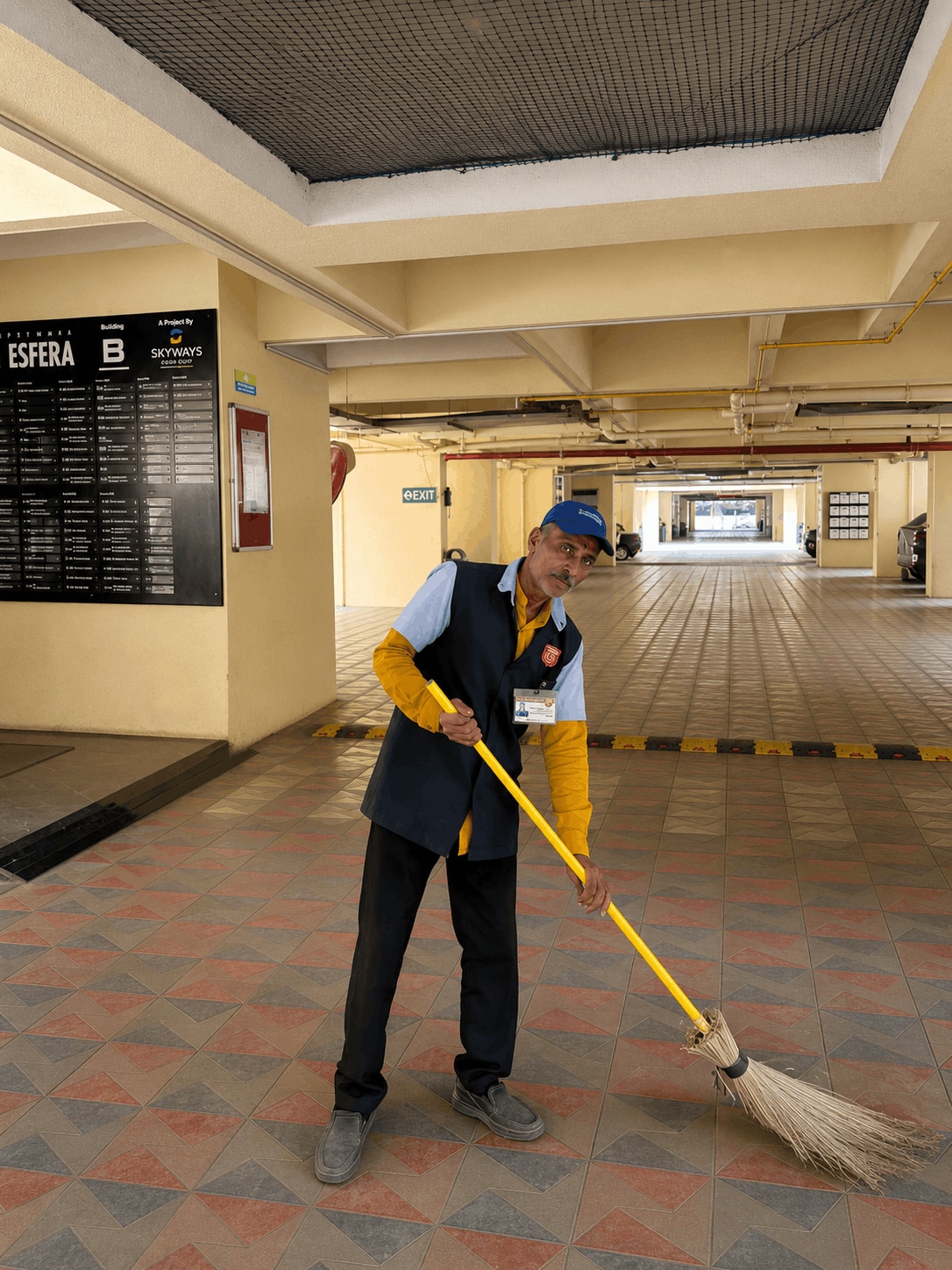
| Manual sweeping and mopping | Stairs, narrow corridors, occupied areas and spot cleaning | Slower on large floors; leaves more moisture |
| Scrubber-dryer | Large hard floors in lobbies, corridors and parking areas | Needs trained operators, storage and clear operating windows |
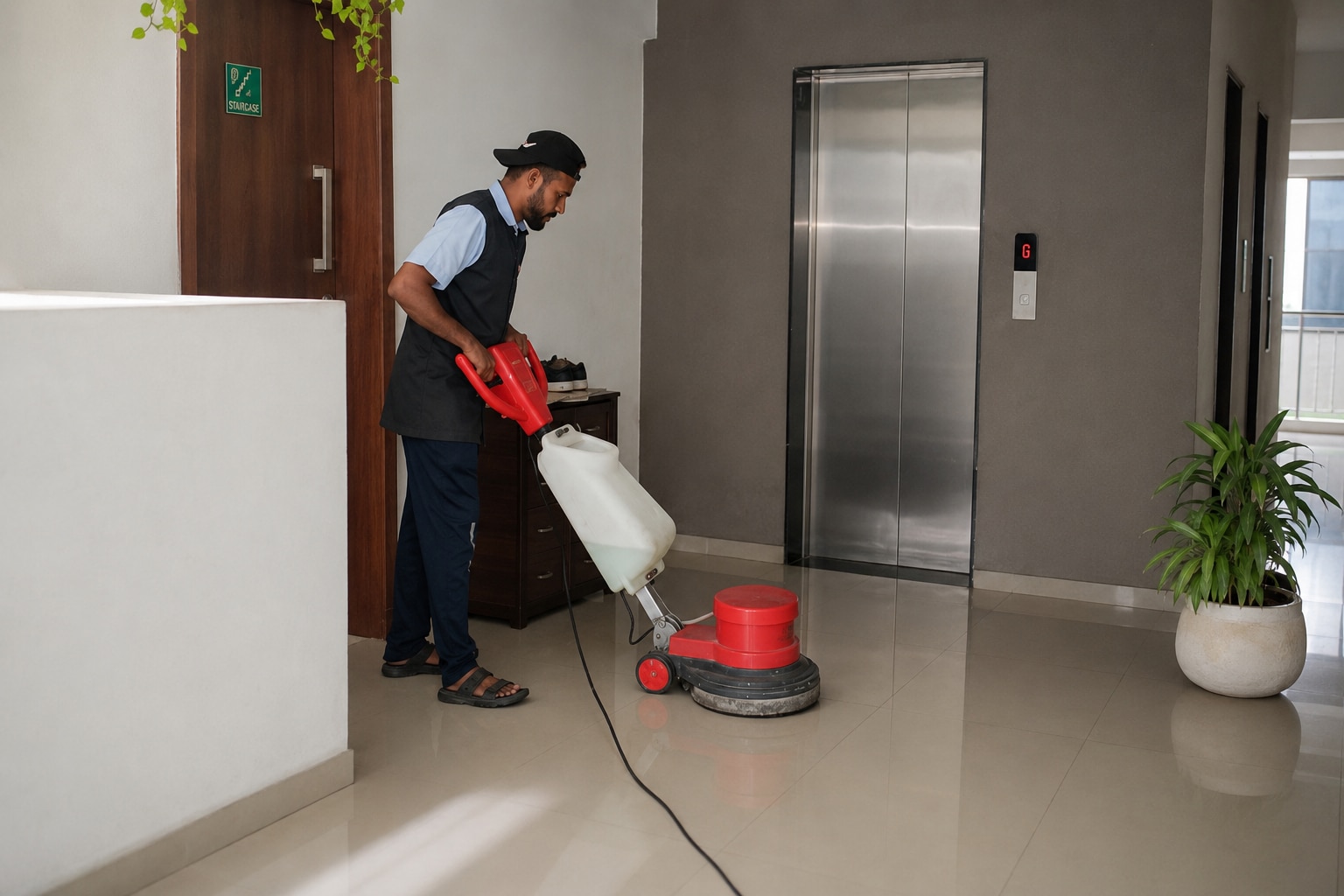
| Vacuum, pressure washer or single-disc machine | Carpets, outdoor grime, textured floors and periodic deep cleaning | Noise, water, access and surface compatibility require control |
Choose machines where open floor area and repeat traffic justify setup time. Keep manual tools for edges, corners, lifts and occupied zones. Specify operators and machine hours separately, or “daily cleaning” will quietly exclude scrubbing, façade work, high-level dusting and post-event recovery.
Control Chemicals, Waste Streams and Cleaning During Occupancy
Keep occupied areas safe by separating cleaning from movement. Use wet-floor signs, cordons and low-odour products near entrances, lifts and reception desks; never leave a cable, bucket or chemical bottle across a public route. Store concentrates in a locked, labelled cabinet, and keep dilution bottles marked with the product name and dilution rate.
Never mix bleach with acid cleaners.
Control waste at the source, then inspect each trolley before use:
- Use separate, colour-coded containers for biodegradable, non-biodegradable, domestic hazardous and sanitary waste.
- Keep broken glass in a rigid, puncture-resistant container and chemical containers apart from general waste.
- Record daily handover or weight by stream, including movement to temporary storage and authorised collection.
For office housekeeping services in Hadapsar, define who may enter occupied offices, where keys and access cards are kept, and when two cleaners must work together. Record lost property and revoke access immediately when personnel leave the contract.
During monsoon, rotate entrance mats, respond to spills immediately, place warning signs, inspect storm-water grates and keep waste-storage areas dry. Use damp cleaning or maintained filtered vacuums instead of dry sweeping; service filters and schedule noisy machine work outside peak occupancy.
Set Service Levels That a Facility Manager Can Inspect
Require a timestamped zone checklist for each shift, signed by the attendant and supervisor. It should record washroom checks, consumable levels, waste removal, equipment used, chemical dilution, defects and corrective action. A single “cleaned daily” entry proves nothing.
Set measurable response times for housekeeping services in Hadapsar:
- Inspect washrooms every 60 minutes; replenish supplies before stock falls below 25%.
- Isolate spills within five minutes and place warning signs immediately.
- Report leaks, sewage, broken glass, blocked grates and damp waste rooms to the control room within 10 minutes.
- Log monsoon mat rotation, drain inspections and all incidents.
| Control area | Evidence to inspect | Minimum service level |
|---|---|---|
| Access | Key/card register, issue-return times, leaver revocation record | No shared cards; revoke access on personnel exit |
| Occupied offices | Entry log and tenant authorisation | Enter only during approved windows; use two-person entry in sensitive zones |
| Emergencies | Incident matrix and handoff log | Cleaner isolates and reports; security or authorised technicians take control |
The scope for commercial complex housekeeping Hadapsar sites must separate cleaning from guarding, visitor management and CCTV monitoring. Record lost property, unsecured doors and suspicious packages, then transfer them to security rather than handling them independently.
Compare Providers Using a Written Commercial Scope
A quote for commercial cleaning services hadapsar should be rejected if it says only “daily cleaning.” Compare a written scope that names each zone, task, frequency, staffing assumption, access rule, consumable, response time and excluded charge.
| Comparison point | Acceptable scope | Warning sign |
|---|---|---|
| Zones and frequency | Separate lobbies, lifts, washrooms, food courts, loading bays, parking and tenant areas; show daily, hourly, weekly and monthly work | One “daily cleaning” line |
| Periodic work | Price machine scrubbing, carpet extraction, façade cleaning, high-level dusting, upholstery, pest-control coordination and post-event cleaning separately | Deep cleaning implied to be free |
| Access and staffing | State daytime and after-hours entry, card and key control, paired work in sensitive areas, lost-property logging and access revocation | “Background-verified staff” with no control process |
| Monsoon and waste | Include mat rotation, wet-floor signs, spill response, drain inspection, damp waste-area controls, segregation, internal movement, storage and authorised handover | Waste removal bundled vaguely |
| Air quality and disruption | Specify damp methods or filtered vacuums, filter maintenance and noisy work outside peak occupancy | Dry sweeping with no equipment checks |
For office housekeeping services Hadapsar, ask for inspection criteria and attendance records before appointment. Topgun Corporate Services Pvt Ltd should be assessed by the same written evidence as every other bidder, not by a broad service label.
Related products
 | Commercial Complex Housekeeping Services Commercial Complex Housekeeping Services Clean spaces. Better experiences. A clean environment isn’t just about appearance—it’s about creating healthier, safer, and more welcoming spaces for... View product → |
 | Housekeeping Services opgun Corporate Services Pvt Ltd provides professional and reliable Housekeeping Services in Pune for corporate offices, IT companies, residential... View product → |
Frequently asked questions
Why should you define cleaning zones before requesting a quote?
Different zones require different labour, equipment, frequencies and inspection standards. Separate public areas, offices, washrooms, food areas, service spaces and high-risk zones instead of pricing the site by floor area alone.
How should a commercial complex organise its housekeeping task plan?
List tasks by frequency: hourly checks for high-use areas, daily cleaning for routine operations, weekly work for detailed cleaning and monthly work for periodic maintenance.
What should you consider when matching housekeeping staff and equipment?
Assess visitor traffic, operating shifts, occupancy, floor and surface types, washroom loads, access constraints and the equipment needed for each zone.
How can a facility manager compare commercial cleaning providers?
Give each provider the same written scope covering zones, frequencies, staffing, equipment, chemicals, waste handling, occupied-area controls and measurable service levels.
Keywords