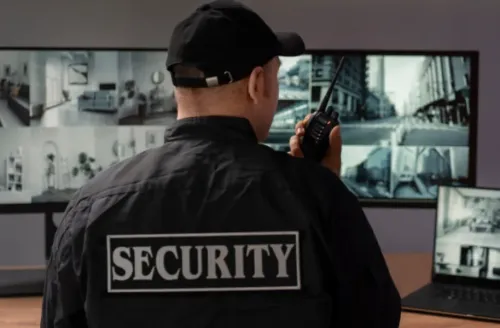



Kharadi has developed into a prominent business district in Pune, Maharashtra, with technology parks, corporate offices, hotels, restaurants, residential communities, and construction projects located across the area. Properties in such a fast-growing locality experience frequent movement of employees, visitors, vendors, delivery personnel, and vehicles.
A professional security service provider in Kharadi should therefore offer more than uniformed manpower. The provider must understand site risks, define guard responsibilities, maintain proper supervision, and help the client establish measurable security procedures.
Initial Inspection and Risk Identification
The service process should begin with a physical inspection of the premises. This allows the provider to identify vulnerable entry points, restricted areas, blind spots, high-traffic zones, and locations requiring regular patrols.
The inspection may cover:
- Main gates and secondary entrances
- Reception and visitor waiting areas
- Parking facilities and basements
- Server rooms and utility spaces
- Loading and unloading points
- Emergency exits
- Boundary walls
- CCTV coverage
- Employee access points
After the inspection, the provider can recommend suitable guard posts, shift patterns, patrol routes, and reporting procedures.
Clearly Defined Duties at Every Post
Each security position should have written post instructions. A guard at a corporate reception requires a different set of responsibilities from someone assigned to a parking area, warehouse gate, or residential entrance.
Post instructions commonly explain how to verify visitors, record vehicle movement, check employee identification, issue passes, handle incoming material, manage keys, conduct patrols, and escalate incidents.
Written instructions reduce confusion during shift changes and help supervisors evaluate whether guards are carrying out their duties correctly.
Recruitment and Training Standards
Clients should understand how guards are screened before deployment. Identity verification, address checks, employment history, physical fitness, communication ability, and role suitability are important factors.
Training should be relevant to the assigned site. Useful areas include:
- Access control procedures
- Visitor and vendor verification
- Observation and incident reporting
- Fire safety awareness
- Emergency communication
- Professional conduct
- Conflict de-escalation
- Basic first-response procedures
Refresher sessions are equally valuable because security risks and workplace procedures can change over time.
Attendance and Shift Management
Unplanned guard absence can leave an important post unattended. A dependable provider should have a system for tracking attendance, arranging replacements, and ensuring proper shift handovers.
During handover, the outgoing guard should inform the incoming guard about visitors still inside, pending vehicle movement, keys issued, unusual observations, equipment faults, and instructions received during the shift.
This continuity is especially important at offices and commercial establishments that operate beyond conventional working hours.
Reporting and Client Communication
A security provider should maintain accurate records instead of relying only on verbal updates. Common documents include visitor registers, vehicle logs, material movement registers, patrol records, key registers, incident reports, and daily occurrence books.
Topgun Corporate Services Pvt Ltd works with businesses to define site responsibilities and establish organised reporting practices. Such documentation helps clients in Kharadi review recurring issues, verify daily activity, and make informed operational decisions.
Technology Should Support Guarding
CCTV cameras, access-control systems, alarms, handheld communication devices, and digital patrol applications can improve visibility. However, technology is most effective when trained personnel know how to use it and respond to alerts.
A capable provider coordinates manpower with available security systems rather than treating them as separate arrangements. Businesses evaluating security support should therefore examine training, supervision, documentation, replacement planning, and communication quality—not merely the number of guards offered.