

Hadapsar is one of Pune’s busiest commercial and residential zones, with IT parks, offices, warehouses, hospitals, retail outlets, educational institutions, and housing societies operating throughout the day. This level of activity creates varied security requirements that cannot be addressed through gatekeeping alone.
Professional security services in Hadapsar help organisations manage entry points, visitor movement, workplace risks, valuable assets, and emergency situations through trained personnel and documented procedures. Understanding these functions can help businesses build a security arrangement suited to their premises.
Security Begins With a Site Assessment
Every property has a different risk profile. An office building may need visitor verification and access control, while a warehouse may require stronger perimeter surveillance and material movement checks.
A site assessment generally examines:
- The number of entry and exit points
- Daily visitor and employee movement
- Parking and loading areas
- Locations containing valuable equipment
- Fire exits and evacuation routes
- Areas with restricted access
- Existing CCTV and alarm systems
- Daytime and nighttime vulnerabilities
This assessment allows the security plan to reflect actual conditions instead of relying on a standard deployment model.
Trained Guards Perform Multiple Functions
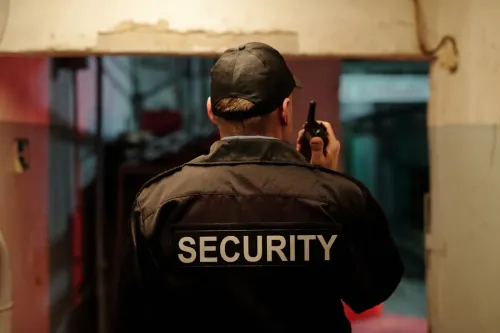
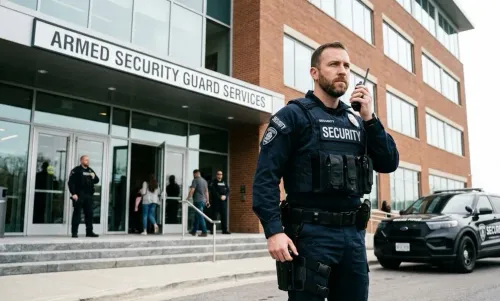
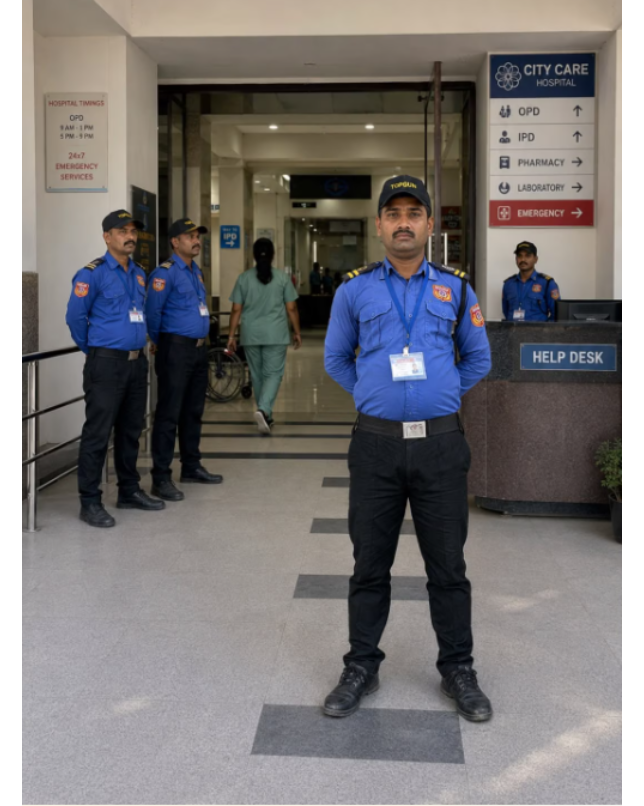
Security guards are often the first people employees, customers, vendors, and visitors meet when entering a property. Their conduct influences both safety and the overall experience at the premises.
Depending on the site, guards may be responsible for checking identification, maintaining visitor registers, issuing entry passes, inspecting incoming vehicles, recording material movement, patrolling designated areas, and reporting unusual activity.
At commercial properties, guards may also guide visitors to the correct reception area and prevent unauthorised access to employee-only zones. At residential premises, their duties can include verifying domestic workers, monitoring deliveries, and managing vehicle entry.
Patrolling Helps Detect Risks Early
A guard stationed at the main gate cannot observe every section of a large property. Scheduled and random patrols help cover parking spaces, staircases, terraces, storage areas, utility rooms, boundary walls, and less frequently used corridors.
Patrol records should note the time, route, observations, and any corrective action taken. Digital patrol systems can further improve accountability by recording when specific checkpoints were visited.
Regular patrolling can identify issues such as unlocked doors, blocked fire exits, damaged fencing, water leakage, unattended packages, and suspicious movement before they become serious incidents.
Emergency Preparedness Is Equally Important
Security personnel need clear instructions for situations involving fire, medical emergencies, theft, workplace conflict, or attempted intrusion. Guards should know whom to contact, where emergency equipment is located, and how people can be directed toward safe exits.
Basic preparedness may include:
- Understanding the site’s emergency response plan
- Knowing important internal and external contact numbers
- Learning the locations of fire extinguishers and alarms
- Supporting evacuation without creating panic
- Preserving the incident area for further investigation
- Preparing an accurate incident report
Regular drills help security teams respond with greater coordination when an actual emergency occurs.
Supervision Maintains Service Standards
Effective security depends on more than the number of deployed guards. Attendance, grooming, alertness, record maintenance, shift handovers, and adherence to instructions must be checked regularly.
Topgun Corporate Services Pvt Ltd supports organisations with site-oriented security planning, guard deployment, and operational supervision. For businesses in Hadapsar, Pune, clearly defined post instructions and periodic performance reviews can make the security arrangement more consistent.
A reliable security system combines trained manpower, appropriate technology, clear procedures, and active management. When these elements work together, businesses are better equipped to control access, recognise risks, and maintain an orderly environment for employees and visitors.